
Article: Clay, Sheet or Cream? How to Choose the Right Beauty Mask
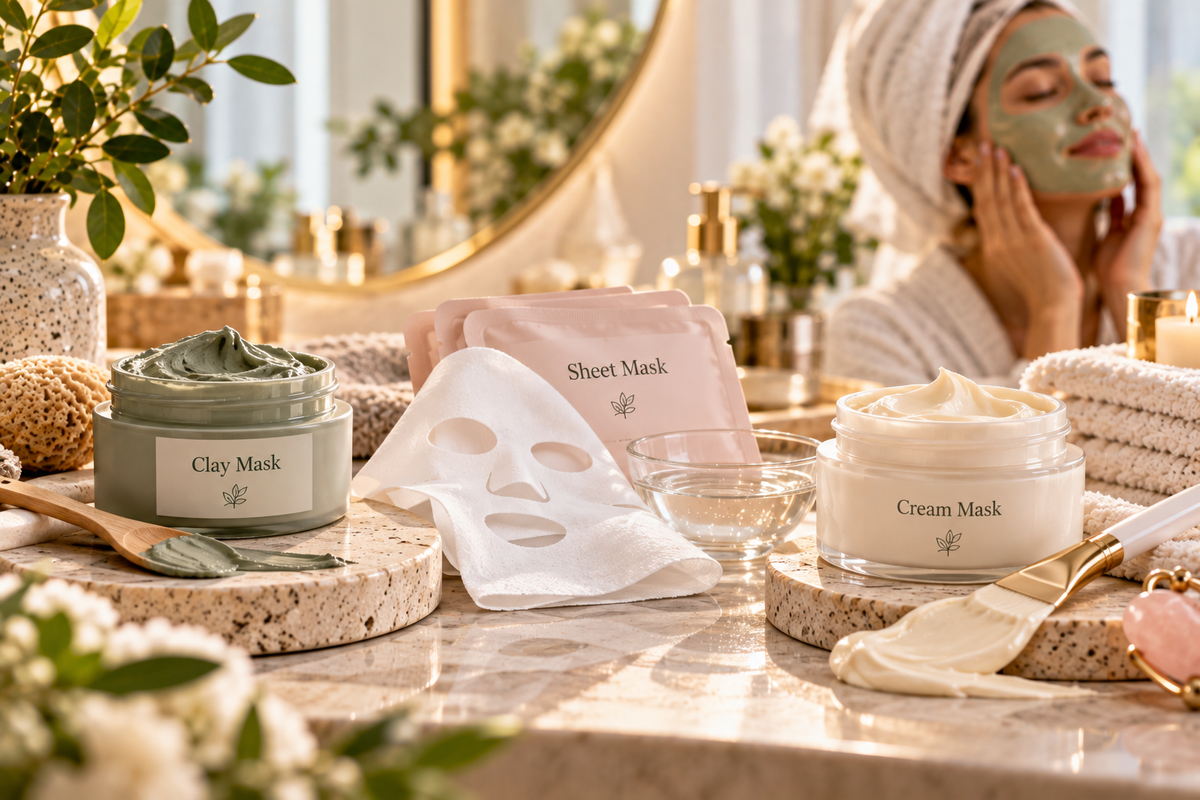
Clay, Sheet or Cream? How to Choose the Right Beauty Mask
Discover the Best Face Mask for Your Skin Type, Hydration Needs & Beauty Goals
A face mask can be one of the easiest ways to upgrade your skincare routine. Whether you’re looking to hydrate dry-feeling skin, manage excess oil, improve the appearance of dullness, or simply enjoy a relaxing self-care ritual, choosing the right beauty mask can make your routine feel more personalized.
But with so many options available, how do you know which one is right for you?
Clay masks, sheet masks, and cream masks each offer a different experience. Some are designed to absorb excess surface oil, while others focus on hydration, skin comfort, or improving the appearance of dry, tired-looking skin.
The secret isn’t finding the most expensive mask or using one every day. It’s understanding what each mask does, which ingredients to look for, and how to match the formula to your skin’s needs.
In this guide, we’ll compare the most popular types of beauty masks, explain their benefits, and help you build a simple masking routine that complements your everyday skincare.
Explore Beauty Masks – Hydration, Detox & Radiance-Boosting Skincare Treatments at Coal Harbour Pharmacy
Why Add a Beauty Mask to Your Skincare Routine?
Your daily cleanser, moisturizer, and sunscreen provide the foundation of a good skincare routine.
Beauty masks are optional treatments that can complement those essentials by providing a more targeted skincare experience.
Depending on the formulation, a facial mask may help:
- Hydrate dry or dehydrated skin
- Absorb excess surface oil
- Improve the appearance of dullness
- Leave skin feeling softer and smoother
- Support skin comfort
- Provide temporary plumping and moisturizing effects
- Create a relaxing at-home skincare ritual
The key is choosing a product suited to your skin rather than assuming every mask delivers the same benefits.
For example, a clay mask designed for oily skin may not be the best choice for someone experiencing significant dryness.
Similarly, a rich cream mask may feel too heavy for someone who prefers lightweight skincare.
The right mask should complement your skin—not leave it feeling stripped, irritated, or uncomfortable.
Clay vs Sheet vs Cream Masks: What’s the Difference?
Before choosing a beauty mask, it helps to understand how the three main types compare.
|
Feature |
Clay Mask |
Sheet Mask |
Cream Mask |
|---|---|---|---|
|
Primary Purpose |
Absorbing excess oil |
Hydration and serum delivery |
Moisturizing and skin comfort |
|
Common Skin Types |
Oily and combination |
Most skin types, depending on formula |
Normal, dry, and dehydrated |
|
Typical Ingredients |
Kaolin, bentonite, charcoal |
Hyaluronic acid, glycerin, niacinamide |
Ceramides, shea butter, squalane |
|
Texture |
Thick clay or mineral paste |
Serum-soaked sheet |
Creamy, rich, or gel-cream |
|
Main Benefit |
Helps reduce surface oil |
Temporarily boosts hydration |
Softens and moisturizes |
|
Application |
Spread over skin |
Place sheet over face |
Apply an even layer |
|
Removal |
Usually rinse off |
Remove sheet; follow label directions |
Rinse off or leave on, depending on product |
|
Best Occasion |
Weekly oil-control routine |
Quick hydration or pre-event skincare |
Evening or dry-skin self-care |
Quick recommendation: Choose clay for excess oil, sheet masks for convenient hydration, and cream masks for richer moisturizing care.
However, the individual formula matters more than the category name alone.
1. Clay Masks: Best for Oily & Combination Skin
Clay masks are among the most recognizable facial treatments.
They typically contain mineral clays that help absorb excess surface oil and remove some impurities from the skin’s surface.
Common ingredients include:
- Kaolin clay
- Bentonite clay
- Other cosmetic mineral clays
- Charcoal
- Selected botanical extracts
What Are the Benefits of Clay Masks?
Depending on the formulation, clay masks may help:
- Absorb excess surface oil
- Reduce the appearance of unwanted shine
- Leave skin feeling freshly cleansed
- Improve the temporary appearance of oily areas
- Complement a routine for oily or combination skin
Clay masks are sometimes marketed as detox masks.
In cosmetic skincare, this generally refers to their ability to absorb surface oil and help remove buildup—not to remove toxins from the body.
Who Should Consider a Clay Mask?
Clay masks may be particularly appealing if you experience:
Oily Skin: Excess surface oil and shine.
Combination Skin: Oiliness concentrated around the forehead, nose, and chin.
Congested-Looking Skin: A desire for a more thorough-feeling cleansing treatment.
How to Use a Clay Mask
- Cleanse your face.
- Apply an even layer, avoiding the eyes and lips.
- Leave on for the time specified by the manufacturer.
- Rinse gently without aggressive scrubbing.
- Follow with a suitable moisturizer.
Avoid leaving a clay mask on longer than directed, particularly if your skin is sensitive or prone to dryness.
Shopping tip: If you have combination skin, consider applying a clay mask only to oilier areas rather than your entire face.
Explore Clay Masks & Oil-Control Facial Treatments
2. Sheet Masks: Best for Convenient Hydration
Sheet masks are popular because they’re easy to use and fit naturally into a relaxing skincare routine.
Most consist of a pre-cut sheet saturated with a serum-like formulation.
The sheet temporarily holds the product against the skin, allowing you to enjoy a concentrated moisturizing experience.
What Are the Benefits of Sheet Masks?
Depending on the ingredients, sheet masks may help:
- Provide temporary hydration
- Improve the appearance of dry or tired-looking skin
- Leave skin feeling softer
- Support a smoother-looking complexion
- Create a refreshing self-care experience
Common ingredients include:
Hyaluronic Acid: Helps attract and retain moisture.
Glycerin: A humectant commonly used for hydration.
Niacinamide: Found in formulas targeting skin tone and barrier support.
Aloe Vera: Often included in soothing skincare products.
Panthenol: Commonly used in moisturizing and skin-conditioning formulations.
Who Should Consider a Sheet Mask?
Sheet masks may appeal to people who want:
- A quick hydration boost
- Convenient skincare
- A relaxing facial treatment
- An occasional pre-event skincare ritual
- A lightweight alternative to richer cream masks
How to Use a Sheet Mask
Start with clean skin.
Carefully unfold the mask and position it over your face, adjusting it around the eyes, nose, and mouth.
Leave it on for the recommended time.
After removing it, follow the product instructions regarding any remaining serum.
Important: Leaving a sheet mask on much longer than recommended doesn’t necessarily improve hydration and may cause discomfort or irritation.
3. Cream Masks: Best for Dry & Dehydrated Skin
Cream masks are designed to provide a richer skincare experience.
They typically have a creamy or emollient texture and may contain moisturizing ingredients that help soften skin and reduce moisture loss.
Depending on the formulation, cream masks can be rinsed off after a short period or used as leave-on treatments.
What Are the Benefits of Cream Masks?
Cream masks may help:
- Moisturize dry-feeling skin
- Improve skin softness
- Support skin comfort
- Reduce the feeling of tightness
- Improve the appearance of dry, rough texture
Ingredients Worth Looking For
Ceramides: Lipids commonly used in skincare products designed to support the skin barrier.
Shea Butter: An emollient ingredient used in rich moisturizing formulas.
Squalane: Helps soften skin and reduce moisture loss.
Glycerin: Attracts water to support hydration.
Hyaluronic Acid: Helps maintain moisture.
Who Should Consider a Cream Mask?
Cream masks may be particularly suitable for:
- Dry skin
- Dehydrated-feeling skin
- Skin exposed to cold or dry weather
- People who prefer rich moisturizing textures
- Evening self-care routines
How to Use a Cream Mask
Apply the product according to its instructions.
Some cream masks are designed to remain on the skin for a short period before rinsing, while others are formulated for longer wear.
Always check the directions before treating a cream mask as an overnight product.
Explore Cream Masks & Moisturizing Facial Treatments
What About Gel Masks, Overnight Masks & Peel-Off Masks?
Clay, sheet, and cream masks are popular categories, but they’re not the only options.
Gel Masks
Gel masks typically have a lightweight, cooling texture.
Depending on the formulation, they may be appealing for people who prefer refreshing hydration without a rich cream.
Overnight Masks
Overnight masks are leave-on skincare treatments specifically formulated for extended wear.
They’re often positioned as intensive moisturizing products.
Only use a mask overnight when the manufacturer indicates that it’s suitable.
Peel-Off Masks
Peel-off masks form a film that can be removed after drying.
Some are marketed for exfoliation or surface buildup removal.
However, they may be uncomfortable or irritating for sensitive skin, particularly if they adhere strongly.
Exfoliating Masks
These may contain ingredients such as alpha-hydroxy acids (AHAs) or beta-hydroxy acids (BHAs).
They can help improve the appearance of rough texture but require careful use, especially when combined with other active skincare products.
Explore Beauty Masks & Targeted Skincare Treatments
How to Choose the Right Face Mask for Your Skin Type
The best face mask depends on your skin’s needs and the individual product formula.
For Oily Skin
Consider a clay mask formulated to absorb excess surface oil.
Look for ingredients such as kaolin or bentonite, and avoid overusing products that leave your skin feeling excessively dry.
For Dry Skin
Consider a cream mask with moisturizing ingredients such as glycerin, ceramides, or squalane.
The goal is to support moisture retention and skin comfort.
For Dehydrated Skin
A hydrating sheet mask or gel mask may be useful.
Look for humectants such as hyaluronic acid and glycerin.
For Combination Skin
You may prefer different masks for different areas.
For example:
Clay Mask on Oily T-Zone + Hydrating Mask on Drier Areas
This approach is sometimes called multi-masking.
For Sensitive Skin
Choose carefully.
Look for gentle formulations and consider fragrance-free options if you’re sensitive to fragrance.
Avoid introducing several unfamiliar ingredients at once.
If your skin is irritated, broken, or inflamed, postpone masking until the concern has resolved or seek professional guidance.
For Dull-Looking Skin
Consider a hydrating or appropriately formulated exfoliating mask.
Hydration can temporarily improve the appearance of skin, while some exfoliating products may help with surface texture.
Find Your Beauty Mask at Coal Harbour Pharmacy
Which Beauty Mask Is Best for Glowing Skin?
The term glowing skin is often used to describe skin that appears hydrated, smooth, and radiant.
Different masks can contribute to that appearance in different ways.
A hydrating sheet mask may temporarily improve the appearance of dehydration.
A cream mask can soften dry-feeling skin.
An appropriately formulated exfoliating mask may help remove accumulated dead surface skin cells.
However, no mask can permanently transform your complexion after one application.
For healthy-looking skin, regular cleansing, moisturizing, and sun protection remain more important than occasional treatments.
Best approach: Choose a mask that addresses the reason your skin looks dull rather than shopping for the word “glow” alone.
How Often Should You Use a Face Mask?
There’s no universal masking schedule.
The appropriate frequency depends on:
- Your skin type
- The product’s ingredients
- The manufacturer’s instructions
- Whether the mask contains exfoliating ingredients
- Your skin’s tolerance
- Other products in your routine
A hydrating mask may be suitable for more frequent use than a strong exfoliating treatment, but that doesn’t mean every hydrating mask should be used daily.
Start conservatively when trying a new product.
If your skin becomes red, uncomfortable, itchy, or excessively dry, stop using the product and reassess your routine.
Remember: More frequent masking doesn’t automatically mean better results.
What Order Should You Use a Face Mask in Your Skincare Routine?
The correct order depends partly on the mask type.
For many rinse-off masks, a practical sequence is:
Cleanser → Face Mask → Rinse → Serum (Optional) → Moisturizer
For sheet masks:
Cleanser → Sheet Mask → Remove → Follow Label Directions → Moisturizer
For leave-on or overnight masks, follow the manufacturer’s recommended application order.
Sunscreen should remain part of your daytime skincare routine, regardless of whether you’re using a mask.
Build a Complete Face Mask & Skincare Routine
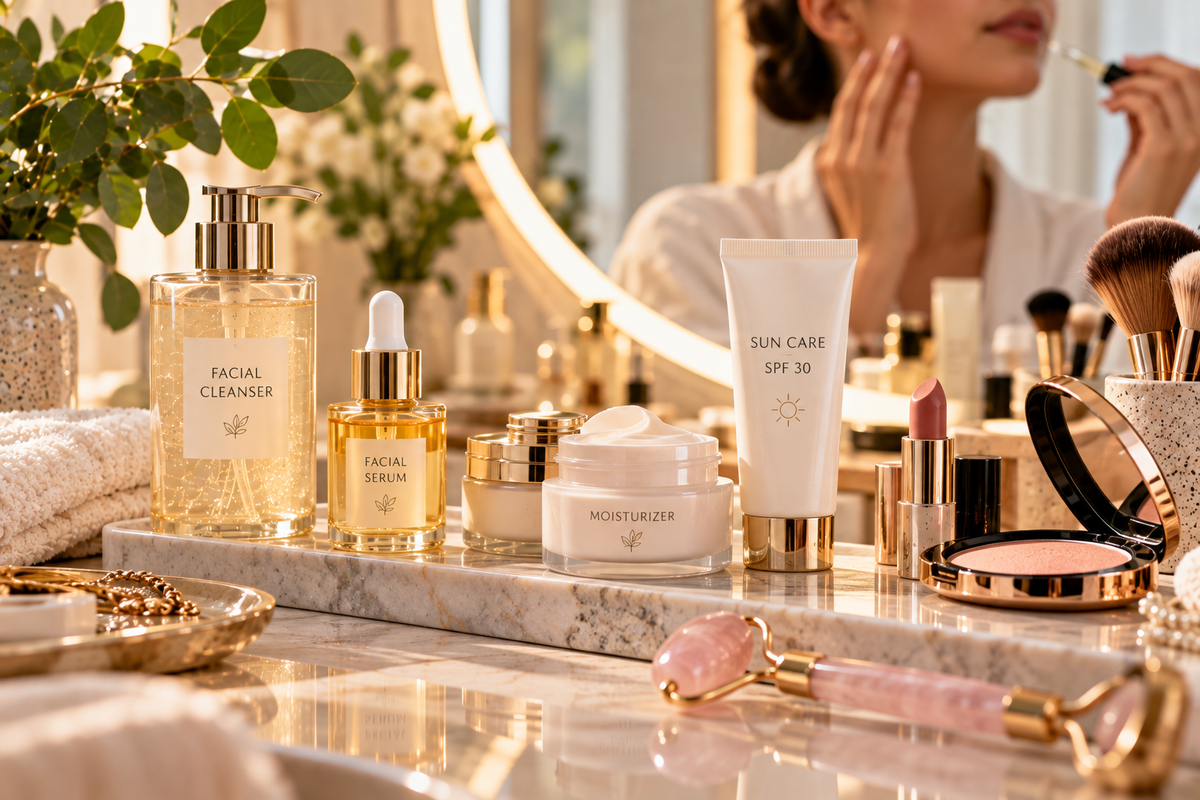
A beauty mask can be an enjoyable addition to your skincare routine, but it works best when paired with appropriate everyday products.
Instead of purchasing several masks with overlapping purposes, consider building a simple routine around your skin’s needs.
Hydration & Radiance Routine
Gentle Facial Cleanser → Hydrating Sheet Mask → Hyaluronic Acid Serum → Facial Moisturizer
Ideal for shoppers focused on hydration and softer-looking skin.
Oily Skin Routine
Facial Cleanser → Clay Mask → Lightweight Moisturizer
A straightforward routine for managing excess surface oil without unnecessarily overcomplicating skincare.
Dry Skin Comfort Routine
Cream Cleanser → Moisturizing Cream Mask → Rich Facial Moisturizer
Designed around hydration and skin comfort.
At-Home Spa Routine
Gentle Cleanser → Beauty Mask → Facial Serum → Moisturizer → Optional Facial Massage Tool
A simple way to turn an ordinary skincare routine into a more relaxing experience.
Shop Beauty Masks & Complete Your Skincare Routine
The 3-Product Beauty Mask Starter Routine
If you’re new to facial masks, start with three complementary skincare essentials.
1. Your Preferred Beauty Mask
Choose clay, sheet, cream, or another format based on your skin type and goals.
2. A Gentle Facial Cleanser
Clean skin helps prepare your face for the treatment.
3. A Suitable Facial Moisturizer
Moisturizing helps complete the routine and maintain skin comfort.
This creates a practical starting point:
Cleanse → Mask → Moisturize
If you already have a cleanser and moisturizer you like, you may only need to add the right mask.
Explore Beauty Masks – Hydration, Detox & Radiance-Boosting Skincare Treatments
Make Face Masks Part of Your Self-Care Ritual
Face masks aren’t only about cosmetic results.
For many people, setting aside 10–20 minutes for skincare can be an enjoyable way to unwind.
You might use that time to:
- Listen to music
- Read a book
- Relax after a busy day
- Enjoy a quiet evening
- Prepare for a special occasion
The experience doesn’t need to be elaborate.
A comfortable space, a suitable mask, and a few uninterrupted minutes can make everyday skincare feel more intentional.
For a more complete self-care experience, pair your facial mask with bath and body products or other personal-care essentials you already enjoy.
Explore Bath & Body Essentials
Common Face Mask Mistakes to Avoid
Choosing a Mask Based Only on Packaging
An attractive product isn’t necessarily suitable for your skin.
Check its intended use and ingredients.
Leaving a Mask on Too Long
Longer application doesn’t always produce better results.
Follow the manufacturer’s directions.
Using Too Many Active Treatments Together
Combining exfoliating masks with strong acids, retinoids, or other potentially irritating products can increase skin sensitivity.
Assuming Every Mask Is Suitable for Sensitive Skin
Even products marketed as gentle may contain ingredients that don’t suit everyone.
Skipping Moisturizer
Depending on the mask and your skin, moisturizer may help complete the routine.
Expecting Permanent Results After One Use
Some masks provide temporary hydration or cosmetic improvements.
Longer-term skin appearance depends on consistent skincare and other factors.
Complete Your Beauty & Skin Care Routine
Beauty masks are one part of a broader skincare routine.
Depending on your needs, consider pairing them with products from these complementary categories.
Beauty, Cosmetics & Skin Care: Facial cleansers, moisturizers, serums, and everyday beauty essentials.
Anti-Aging Skin Products: Targeted skincare formulas for the appearance of fine lines, uneven texture, and other cosmetic concerns.
Bath & Body: Cleansers, body lotions, oils, and self-care essentials.
Sun Care: Sunscreen and daily UV protection.
Beauty & Personal Care: Everyday hygiene, grooming, and broader self-care products.
The goal isn’t to purchase every product.
It’s to choose a few complementary essentials that work together.
Explore Beauty, Cosmetics & Skin Care at Coal Harbour Pharmacy
Why Shop Beauty Masks at Coal Harbour Pharmacy?
Choosing a facial mask can be confusing when products vary in texture, ingredients, and intended use.
At Coal Harbour Pharmacy, our Beauty Masks collection helps you explore facial treatments suited to different skincare preferences and goals.
Whether you’re interested in clay masks for excess oil, sheet masks for convenient hydration, or cream masks for richer moisturizing care, the collection offers a starting point for building a more personalized skincare routine.
Explore beauty masks for:
- Hydration and skin comfort
- Excess surface oil
- Dull-looking skin
- Dry and rough-feeling skin
- Everyday facial treatments
- At-home self-care rituals
The right beauty mask isn’t necessarily the most complicated one. It’s the one that fits your skin and routine.
Shop Beauty Masks – Hydration, Detox & Radiance-Boosting Skincare Treatments
Frequently Asked Questions
Which Is Better: Clay Mask or Sheet Mask?
Neither is universally better. Clay masks are commonly used to absorb excess surface oil, while sheet masks typically focus on hydration and delivering a serum-like formulation to the skin.
Are Cream Masks Good for Dry Skin?
Many cream masks contain moisturizing ingredients that can help soften dry-feeling skin and support skin comfort. Choose a formula appropriate for your skin and follow the product directions.
Can You Use a Face Mask Every Day?
It depends on the product and your skin. Some gentle hydrating masks may be suitable for frequent use, while exfoliating or oil-absorbing masks may require less frequent application. Always follow the manufacturer’s directions.
Do Clay Masks Remove Toxins From Your Skin?
Clay masks can absorb surface oil and help remove certain impurities from the skin’s surface. However, claims that cosmetic clay masks remove toxins from the body are not scientifically established.
Should You Wash Your Face Before Applying a Mask?
Generally, yes. Many facial masks are intended for use on clean skin, but always follow the directions for your particular product.
Should You Moisturize After a Face Mask?
Moisturizing after a mask can help maintain skin comfort, particularly after rinse-off treatments. Follow the product instructions and choose a moisturizer appropriate for your skin.
Are Sheet Masks Good for Sensitive Skin?
Some may be suitable, but the individual formula matters. Fragrance and other ingredients can cause irritation in susceptible individuals. Consider simpler formulations and discontinue use if irritation develops.
Which Face Mask Is Best for Glowing Skin?
Hydrating masks can temporarily improve the appearance of dehydrated skin, while appropriately formulated exfoliating masks may improve surface texture. The best choice depends on the cause of dullness and your skin’s tolerance.
Can You Use Different Masks on Different Parts of Your Face?
Yes. Multi-masking involves using different products on different facial areas according to their needs. For example, someone with combination skin might use a clay mask on an oily T-zone and a hydrating mask on drier areas.
Quick Answer: Clay, Sheet or Cream Mask?
Choose a clay mask if your main concern is excess surface oil or shine.
Choose a sheet mask if you want convenient hydration and a refreshing skincare experience.
Choose a cream mask if your skin feels dry and you prefer richer moisturizing care.
For combination skin, different masks may be appropriate for different areas.
The best beauty mask is the one that addresses your skin’s needs without causing unnecessary irritation.
Find the Right Beauty Mask for Your Skin
A good facial mask doesn’t need to promise dramatic results to deserve a place in your skincare routine.
Clay masks can help manage excess surface oil. Sheet masks offer convenient hydration. Cream masks provide richer moisturizing care.
And when paired with a suitable cleanser, moisturizer, and consistent sun protection, the right mask can become an enjoyable part of your broader skincare routine.
The most important step is choosing according to your skin type, your skincare goals, and the experience you actually enjoy.
Ready to discover your next skincare essential?
Explore Beauty Masks – Hydration, Detox & Radiance-Boosting Skincare Treatments at Coal Harbour Pharmacy.

Written by CHP — Pharmacist Reviewed

Leave a comment
This site is protected by hCaptcha and the hCaptcha Privacy Policy and Terms of Service apply.