
Motion Sickness – Travel Nausea & Dizziness Relief
Explore pharmacist-curated motion sickness products for temporary relief and prevention of travel-related nausea, vomiting, dizziness, and discomfort, with OTC medications, ginger products, child-appropriate options, and non-medicated travel solutions.
────────────────────────────────────
About Motion Sickness
Motion sickness can occur when the brain receives conflicting information about movement from the inner ear, eyes, and other sensory systems.
It can happen during car rides, flights, cruises, ferries, trains, amusement rides, and other situations involving real or perceived movement.
Common symptoms include nausea, dizziness, cold sweating, increased salivation, headache, fatigue, loss of appetite, and sometimes vomiting.
The Motion Sickness collection at Coal Harbour Pharmacy includes over-the-counter medications, ginger products, chewables, liquids, and non-medicated options to help adults and families prepare for travel.
The best option depends on age, trip duration, symptom severity, medical history, medications, and whether drowsiness would create a safety concern.
Key Benefits
Depending on the product, motion sickness solutions may help:
• Prevent or reduce travel-related nausea
• Reduce vomiting associated with motion sickness
• Help manage dizziness and queasiness
• Improve comfort during car, air, or boat travel
• Provide short-term support during motion exposure
• Offer medicated or non-medicated options
• Provide travel-friendly formats for adults and children
Many motion sickness medications work best when used before symptoms become established, but timing varies by active ingredient and product. Always follow the individual label.
Who It’s Ideal For
Motion sickness products may be useful for people who:
• Experience nausea during car travel
• Become seasick on boats, ferries, or cruises
• Experience motion sickness during flights
• Develop symptoms on buses or trains
• Are sensitive to amusement rides
• Frequently travel for work or leisure
• Want a non-medicated travel option
• Need an age-appropriate product for a child
Not every product is suitable for every traveller, particularly young children, pregnant individuals, older adults, and people taking other medications.
What Causes Motion Sickness?
The inner ear contains the vestibular system, which helps the brain detect movement, acceleration, and orientation.
Motion sickness can develop when information from this system does not match information received from the eyes and other sensory pathways.
For example, while reading in a moving car:
• The inner ear detects movement
• The body experiences acceleration and turning
• The eyes may remain focused on a relatively stationary page or screen
This sensory conflict can trigger motion sickness in susceptible people.
Common Symptoms
Motion sickness may cause:
• Nausea
• Queasiness
• Dizziness
• Cold sweating
• Pale skin
• Increased salivation
• Headache
• Fatigue
• Drowsiness
• Loss of appetite
• Vomiting
Symptoms generally improve after motion stops, although some people may continue to feel unwell temporarily afterward.
Motion Sickness in Cars
Car sickness is particularly common when passengers:
• Read during travel
• Look down at a phone or tablet
• Sit where outside visual references are limited
• Travel on winding roads
Looking toward the horizon or another stable external reference can help some people.
When practical and safe, fresh air, regular breaks, and minimizing reading or screen use may also improve comfort.
Motion Sickness on Boats & Cruises
Sea travel can create prolonged, repetitive movement and can be especially challenging for people prone to motion sickness.
For longer journeys, consider the expected duration of action of the selected product.
Strategies such as spending time where movement is less pronounced and looking toward the horizon may also help.
Travellers who anticipate significant seasickness may benefit from discussing prevention with a pharmacist or healthcare professional before departure.
Motion Sickness During Air Travel
Turbulence and changes in aircraft movement can trigger symptoms in susceptible travellers.
Helpful strategies may include:
• Looking at a stable visual reference when possible
• Avoiding excessive alcohol
• Eating appropriately before travel
• Staying hydrated
• Choosing an appropriate motion sickness product before symptoms become severe
Air sickness should be distinguished from nausea caused by anxiety, migraine, illness, dehydration, or another medical issue.
OTC Motion Sickness Medications
Over-the-counter motion sickness products commonly use medications with antihistamine and anticholinergic effects.
Depending on the Canadian product, active ingredients may include medications such as dimenhydrinate.
These medicines can be effective for motion-related nausea and vomiting, but they may also cause:
• Drowsiness
• Dry mouth
• Blurred vision
• Dizziness
• Reduced alertness
• Difficulty concentrating
Read the individual product label carefully.
Dimenhydrinate
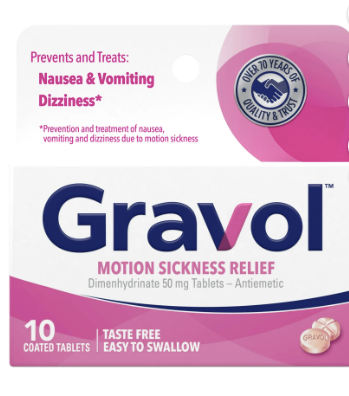
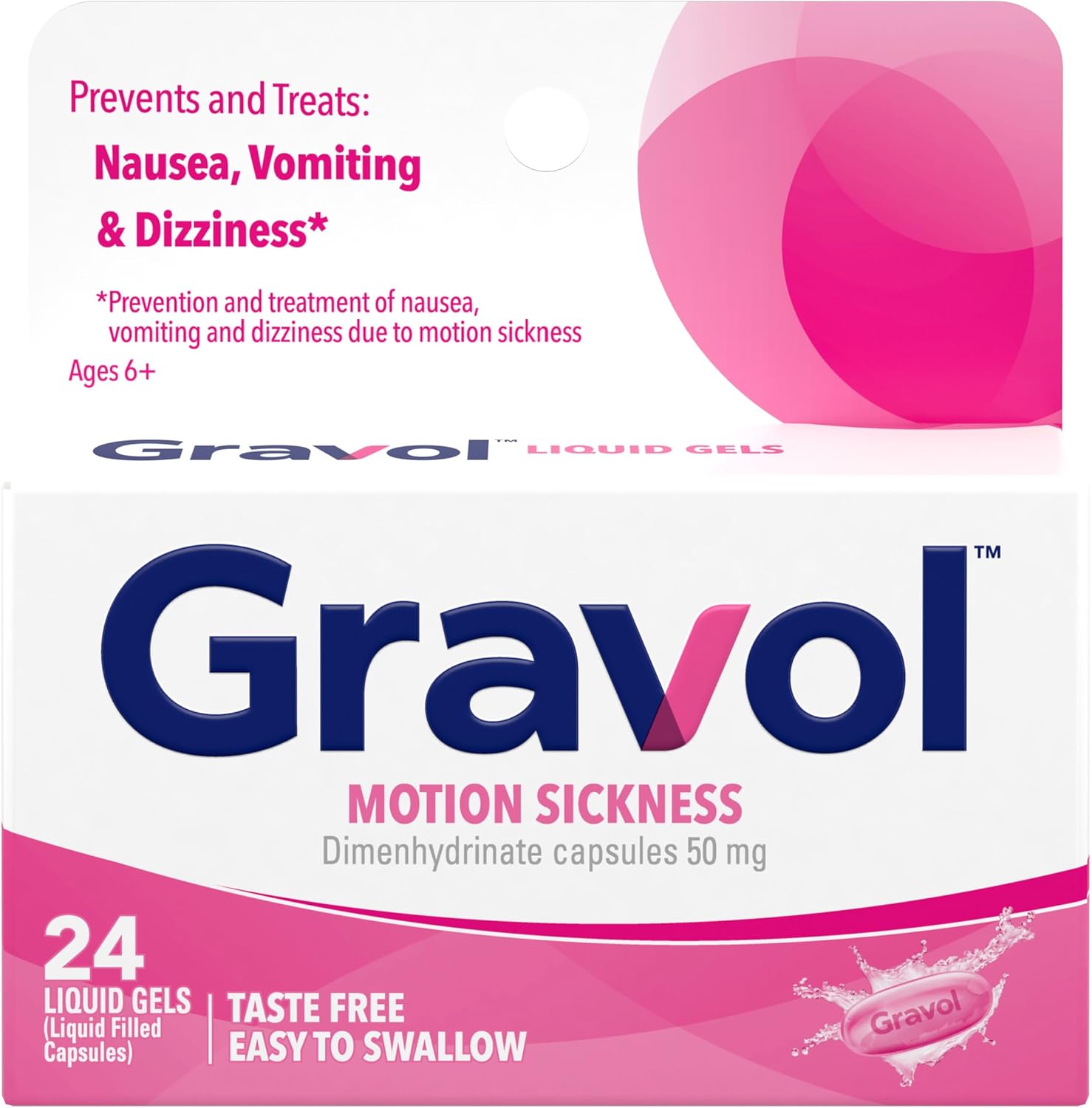
Dimenhydrinate is a widely used OTC medication for the prevention and treatment of nausea, vomiting, and dizziness associated with motion sickness.
It is available in various formulations and strengths.
Because it can cause significant drowsiness, people using dimenhydrinate should be cautious with:
• Driving
• Operating machinery
• Alcohol
• Cannabis
• Sedatives
• Sleep medications
• Other medicines that cause drowsiness
Age-specific products and dosing instructions should be followed carefully.
“Non-Drowsy” Motion Sickness Products
The term non-drowsy should be evaluated according to the actual active ingredient.
Many effective conventional motion sickness medications can impair alertness.
Natural or non-medicated products may be marketed as non-drowsy, but they may have different levels of evidence and should not automatically be assumed equivalent to OTC medication.
Always check the product rather than choosing solely on a front-label claim.
Ginger
Ginger (Zingiber officinale) has a long history of use for digestive complaints and nausea.
It is available in forms such as:
• Capsules
• Tablets
• Chewables
• Lozenges
• Candies
• Teas
• Liquid preparations
Research into ginger for motion sickness has produced mixed results, and it may not be as reliable as conventional medication for everyone.
It can nevertheless be a useful option for some travellers seeking a non-sedating botanical approach.
Peppermint
Peppermint is commonly used for digestive comfort and may provide a refreshing sensory experience when nausea occurs.
It can be found in:
• Teas
• Lozenges
• Oral preparations
• Aromatic products
Evidence for peppermint specifically preventing motion sickness is limited.
It should therefore be considered supportive rather than equivalent to an established motion sickness medication.
Acupressure Wristbands
Acupressure wristbands apply pressure to a point on the inner wrist, commonly referred to as the P6 or Neiguan point.
They are popular because they:
• Do not contain medication
• Do not cause medication-related drowsiness
• Can be reused
• Are easy to use while travelling
Research on acupressure for nausea is mixed, and individual responses vary.
They can be reasonable for people who prefer a non-drug option, provided significant symptoms are not being undertreated.
Motion Sickness Patches
The word “patch” can refer to very different products.
Some patches may be non-medicated or complementary products, while certain prescription transdermal medications used for motion sickness are pharmacologically active and have important contraindications and side effects.
Do not assume every motion sickness patch is a natural OTC product.
Check the active ingredient and Canadian regulatory status of the specific product.
Chewables & Lozenges
Chewable tablets and lozenges can be convenient during travel, particularly for people who dislike swallowing capsules.
However, the format does not determine effectiveness.
A chewable medication, ginger lozenge, and peppermint candy have different active ingredients and evidence.
Always check:
• Active ingredient
• Strength
• Recommended age
• Dose
• Dosing interval
• Maximum daily amount
Motion Sickness in Children
Children can experience motion sickness, particularly during car and other passenger travel.
Choosing a product requires careful attention to:
• Child’s age
• Weight when relevant
• Active ingredient
• Product concentration
• Dose
• Dosing interval
• Maximum daily amount
• Potential drowsiness
Do not simply give a smaller amount of an adult product unless the label specifically provides appropriate paediatric directions.
Non-drug strategies can also be useful.
Helping Children During Car Travel
Practical strategies may include:
• Encourage looking outside rather than down at a screen
• Avoid reading during winding journeys
• Provide fresh air when practical
• Schedule appropriate breaks on long trips
• Avoid overly heavy meals immediately before travel
• Keep suitable fluids available
• Position the child according to all applicable vehicle and car-seat safety requirements
Never change safe child-restraint positioning simply to address motion sickness.
Motion Sickness During Pregnancy
Nausea during pregnancy and motion sickness are not necessarily the same condition.
Pregnant individuals should check with a healthcare professional before using motion sickness medications, herbal products, or concentrated supplements.
Some options may be appropriate in pregnancy, but selection should consider the specific ingredient, dose, trimester, other medications, and individual health circumstances.
Older Adults
Certain motion sickness medications have anticholinergic effects that may be more problematic in older adults.
Possible concerns can include:
• Drowsiness
• Confusion
• Blurred vision
• Dry mouth
• Constipation
• Urinary difficulty
• Increased fall risk
A pharmacist can help assess whether a particular medication is appropriate.
Motion Sickness & Driving
This is an important safety consideration.
Some motion sickness medications can significantly impair:
• Alertness
• Reaction time
• Coordination
• Concentration
A product that may be reasonable for a passenger may be inappropriate for someone who needs to drive.
Check the label before travelling and do not drive if the medication causes drowsiness or impairment.
Motion Sickness & Alcohol
Alcohol can:
• Increase drowsiness from certain medications
• Impair coordination
• Contribute to dehydration
• Worsen nausea in some people
Combining alcohol with sedating motion sickness medication should generally be avoided.
Medication Interactions & Precautions
Additional caution may be required for people who use:
• Sleep medications
• Sedatives
• Opioids
• Certain antihistamines
• Some antidepressants or psychiatric medications
• Other medicines with anticholinergic effects
Certain motion sickness medications may also require caution in people with conditions such as glaucoma, urinary retention, or prostate-related urinary problems.
Check the specific label and ask a pharmacist when unsure.
Preventing Motion Sickness Without Medication
Behavioural strategies can make a meaningful difference.
Try to:
• Look toward the horizon or a stable external point
• Avoid prolonged reading during motion
• Limit screen use when it triggers symptoms
• Face the direction of travel when practical
• Keep the head relatively stable
• Get fresh air when possible
• Take breaks during long road trips
• Avoid excessive alcohol
• Eat according to personal tolerance before travelling
• Prioritize adequate sleep before travel
No single strategy works for everyone, so combining appropriate behavioural measures can be useful.
When Should You Take a Motion Sickness Product?
Timing depends on the product.
Some medications are most useful when taken before travel begins, while other products have different directions.
There is no single timing rule appropriate for every tablet, ginger product, patch, or other formulation.
Follow the individual label carefully.
For an important trip or cruise, consider choosing the product in advance rather than waiting until significant nausea develops.
Motion Sickness vs Vertigo
Motion sickness and vertigo are not the same.
Motion sickness is typically triggered by movement or sensory conflict.
Vertigo describes a sensation of spinning or movement and can arise from multiple inner-ear, neurological, medication-related, or other causes.
New, recurrent, or severe vertigo should not automatically be self-treated as motion sickness.
Motion Sickness vs Migraine
Migraine can include:
• Nausea
• Vomiting
• Dizziness
• Sensitivity to movement
• Light or sound sensitivity
People with migraine can also be particularly susceptible to motion sickness.
Recurring travel-associated symptoms accompanied by significant headache or other neurological symptoms may warrant assessment.
Motion Sickness vs Travel Anxiety
Anxiety can also produce nausea, dizziness, sweating, and gastrointestinal discomfort during travel.
If symptoms occur primarily because of fear of flying, panic, or another anxiety trigger rather than movement itself, conventional motion sickness treatments may not address the underlying issue.
Identifying the trigger can help guide a more appropriate strategy.
How to Choose a Motion Sickness Product
Consider the Traveller
Age, pregnancy status, health conditions, and medications can affect product choice.
Consider the Journey
A short car ride and a multi-day cruise may require different approaches.
Consider Drowsiness
If alertness is essential, carefully review whether the product can cause sedation.
Choose the Right Format
Options may include tablets, chewables, liquids, ginger products, or non-medicated wristbands.
Check the Active Ingredient
Do not assume products with similar travel-related branding work the same way.
Plan Ahead
People with predictable motion sickness can often prepare before travel rather than waiting for severe symptoms.
When to Seek Medical Attention
Symptoms deserve medical assessment when they are:
• Severe or persistent after travel ends
• Accompanied by a new severe headache
• Associated with weakness, numbness, difficulty speaking, or other neurological symptoms
• Associated with fainting
• Causing significant dehydration
• Accompanied by blood in vomit
• Occurring repeatedly without a clear motion trigger
• Associated with significant hearing changes
• New or unusual compared with previous motion sickness
These symptoms may have a cause other than ordinary travel-related motion sickness.
FAQs
What causes motion sickness?
It is thought to result largely from conflicting sensory information about movement, particularly between the vestibular system in the inner ear and visual signals.
What medicine is commonly used for motion sickness in Canada?
Dimenhydrinate is a commonly available OTC option. Product strengths, formulations, age restrictions, and dosing vary, so follow the specific Canadian label.
Do motion sickness tablets cause drowsiness?
Many conventional products can. Dimenhydrinate and similar medications may significantly reduce alertness.
Can ginger help with motion sickness?
Ginger has been studied for nausea, including motion-related nausea, but results are mixed. Some travellers find it useful, particularly when looking for a non-sedating botanical option.
Do acupressure wristbands work?
Evidence is mixed and individual responses vary. Their advantage is that they are non-medicated and do not cause medication-related drowsiness.
Should I take motion sickness medicine before travelling?
Many conventional medications work best when taken before motion exposure, but exact timing depends on the product. Follow its label directions.
Can children use motion sickness medicine?
Some products have age-appropriate paediatric directions, but not all do. Use the correct product, strength, and dose for the child’s age and weight when applicable.
What is the best option if I need to drive?
Avoid medications that impair alertness or carry driving warnings. Ask a pharmacist about appropriate alternatives if you need to remain fully alert.
Are motion sickness patches available without a prescription?
Products marketed as patches can contain very different ingredients. Some are non-medicated, while certain pharmacologically active motion sickness patches may require a prescription depending on the jurisdiction. Check the individual product.
Is dizziness always motion sickness?
No. Dizziness and vertigo have many possible causes. New, severe, persistent, or unexplained dizziness should be assessed appropriately.
Why Shop Motion Sickness at Coal Harbour Pharmacy?
• Pharmacist-curated motion sickness and travel-health products
• OTC medication and non-medicated options
• Ginger, chewable, liquid, and travel-friendly formats
• Adult and age-appropriate children’s options
• Products for car, air, boat, and other travel situations
• Fast Canada-wide shipping
Related Collections
────────────────────────────────────
Shop Motion Sickness →
Sort by
9 products






FREE STANDARD SHIPPING
Satisfied or refunded
Top-notch support
Secure payments
Encrypted checkout processing
Offers exclude prescriptions and in-store purchases.
Subscribe & Get a First-Order Reward
Plus, earning reward points on eligible online purchases and enjoy future store credit.
We respect your inbox at Coal Harbour Pharmacy - Expect thoughtfully curated health and wellness updates, timely reminders, and exclusive online savings.