
Article: Bioflavonoids: The Missing Piece in Your Antioxidant & Wellness Routine?
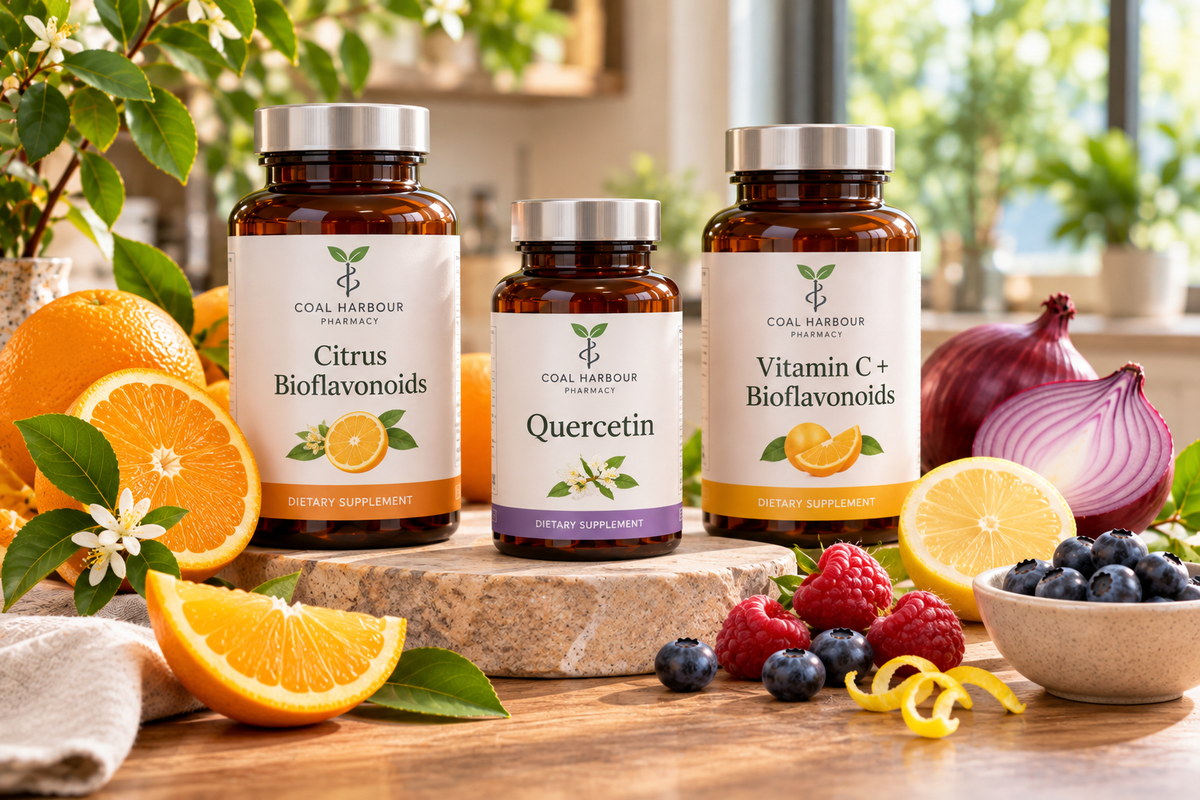
Bioflavonoids: The Missing Piece in Your Antioxidant & Wellness Routine?
Discover How Citrus Bioflavonoids, Quercetin, Rutin & Hesperidin Fit Into Antioxidant, Immune & Circulatory Wellness
When people think about antioxidants, vitamin C, vitamin E, and familiar superfoods often come to mind.
But another group of naturally occurring plant compounds deserves attention: bioflavonoids.
Found in citrus fruits, berries, apples, onions, tea, and many other plant foods, bioflavonoids are part of a larger family of compounds known as polyphenols.
They contribute to the colours and biological characteristics of many fruits and vegetables and have attracted scientific interest for their antioxidant activity and potential effects on vascular and immune-related processes.
Today, ingredients such as quercetin, rutin, hesperidin, and citrus bioflavonoid complexes appear in a growing range of nutritional supplements.
Some are combined with vitamin C, while others are marketed for targeted antioxidant or circulatory wellness.
But what exactly do bioflavonoids do? Are they worth taking as supplements? And how do you choose between the different formulations?
In this guide, we'll explore bioflavonoid benefits, common types, what research suggests, and how to select a supplement that fits your wellness goals.
Explore Bioflavonoids – Antioxidant, Immune & Circulatory Support at Coal Harbour Pharmacy
What Are Bioflavonoids?
Bioflavonoids, commonly called flavonoids, are naturally occurring plant compounds found in fruits, vegetables, herbs, and beverages.
They belong to the broader polyphenol family.
Plants produce flavonoids for several purposes, including pigmentation and responses to environmental stress.
Humans consume these compounds regularly through plant-based foods.
Common Types of Bioflavonoids
The flavonoid family includes several groups:
-
Flavonols: Quercetin, kaempferol, and related compounds.
-
Flavanones: Hesperidin and naringin, commonly associated with citrus fruits.
-
Flavones: Apigenin and luteolin.
-
Flavan-3-ols: Catechins found in tea and other foods.
-
Anthocyanins: Pigments responsible for the red, purple, and blue colours of many berries.
-
Isoflavones: Compounds such as genistein found in soy.
Although these substances share certain chemical characteristics, they are not interchangeable.
Their absorption, metabolism, biological effects, and clinical evidence differ.
Are Bioflavonoids Essential Nutrients?
Unlike vitamin C, bioflavonoids are not classified as essential vitamins.
There is no established recommended daily dietary allowance for flavonoids as a group.
However, flavonoid-rich foods can contribute to a healthy dietary pattern.
Bioflavonoids are best understood as plant-derived compounds of nutritional interest rather than nutrients everyone must supplement.
Why Are Bioflavonoids Associated With Antioxidant Support?
Antioxidants are substances that can help limit certain forms of oxidative damage.
Oxidative stress occurs when reactive molecules and the body's protective systems become imbalanced.
Bioflavonoids can demonstrate antioxidant activity in laboratory experiments.
However, their effects in the human body are more complex than simply neutralizing free radicals.
How Bioflavonoids May Work
Researchers have investigated whether certain flavonoids influence:
Cellular Signalling: Biological pathways involved in how cells respond to stress.
Inflammatory Processes: Mechanisms associated with normal immune and inflammatory responses.
Vascular Function: Processes involving blood vessels and endothelial cells.
Antioxidant Defence Systems: Enzymes and cellular pathways involved in managing oxidative stress.
Does Antioxidant Activity Mean Better Health?
Not automatically.
A compound's antioxidant activity in a laboratory does not guarantee meaningful benefits when consumed as a supplement.
Human studies are necessary to determine whether a particular ingredient improves a specific health outcome.
The most established way to increase dietary flavonoid intake is to regularly eat a variety of fruits, vegetables, and other plant foods.
1. Citrus Bioflavonoids: Popular Companions to Vitamin C
Citrus bioflavonoids are among the most recognizable ingredients in antioxidant supplements.
They are naturally present in oranges, lemons, grapefruits, and other citrus fruits.
Common citrus flavonoids include:
-
Hesperidin
-
Hesperetin
-
Naringin
-
Narirutin
-
Eriocitrin
Different citrus fruits contain different combinations and amounts.
Why Are Citrus Bioflavonoids Combined With Vitamin C?
Vitamin C and citrus flavonoids naturally occur together in citrus fruits.
Supplement manufacturers often combine them in formulas marketed for antioxidant and everyday wellness support.
Vitamin C is an essential nutrient that contributes to normal immune function, collagen formation, and antioxidant protection.
Bioflavonoids are separate plant compounds that have been investigated for additional biological effects.
Do Bioflavonoids Improve Vitamin C Absorption?
Claims that citrus bioflavonoids consistently increase vitamin C absorption are not well established.
Some research has explored possible interactions, but results are mixed.
Vitamin C does not require added bioflavonoids to perform its essential nutritional functions.
Who Might Explore Citrus Bioflavonoid Supplements?
Adults interested in plant-derived antioxidant products or vitamin C combination formulas may wish to compare citrus bioflavonoid supplements.
However, a combination formula isn't necessarily better than vitamin C alone.
Explore Citrus Bioflavonoids & Vitamin C Supplements
2. Quercetin: A Widely Studied Plant Flavonoid
Quercetin is a flavonol naturally found in foods such as:
-
Red onions
-
Apples
-
Capers
-
Berries
-
Kale
-
Tea
It is one of the most extensively investigated dietary flavonoids.
Why Is Quercetin Popular?
Researchers have studied quercetin for its effects on oxidative stress, inflammatory signalling, vascular function, and immune-related biological pathways.
Some human studies have explored changes in blood pressure and selected inflammatory markers.
However, results vary, and many potential benefits remain uncertain.
Quercetin & Immune Wellness
Quercetin has demonstrated effects on certain immune-related pathways in laboratory research.
But this does not establish that quercetin supplements prevent respiratory infections, treat allergies, or reliably improve immune function in healthy adults.
Quercetin & Circulatory Wellness
Some clinical studies suggest quercetin may modestly influence blood pressure in certain populations.
However, the evidence is not sufficient to recommend quercetin as a substitute for prescribed blood-pressure treatment.
Quercetin is an interesting research compound, but its clinical benefits depend on the specific outcome being studied.
Explore Quercetin & Antioxidant Supplements
3. Rutin: A Bioflavonoid Studied for Vascular Health
Rutin is a naturally occurring flavonoid glycoside related to quercetin.
It is found in foods and plants such as buckwheat, asparagus, citrus fruits, and certain herbs.
Rutin is often included in supplements marketed for circulatory and antioxidant wellness.
Why Is Rutin Associated With Circulation?
Rutin and related compounds have been investigated for their effects on blood-vessel-related biological processes.
Some rutin-derived compounds, including hydroxyethylrutosides, have been studied in specific venous conditions.
However, results involving these derivatives should not automatically be applied to ordinary rutin supplements.
Can Rutin Strengthen Capillaries?
Products sometimes claim that rutin strengthens capillaries or improves circulation.
These claims require careful interpretation.
Evidence depends on the specific compound, formulation, population, and clinical outcome.
Rutin should not be used to self-treat unexplained leg swelling, circulation problems, or suspected vascular disease.
Explore Rutin & Circulatory Wellness Products
4. Hesperidin: A Citrus Flavonoid With Circulatory Research Interest
Hesperidin is a flavanone glycoside found primarily in citrus fruits, particularly oranges.
It has attracted attention for its potential effects on vascular and metabolic processes.
Hesperidin & Blood Vessel Function
Some human studies have investigated hesperidin-containing products for their effects on endothelial function, blood pressure, and other vascular measurements.
Results remain mixed, and many studies are relatively small.
Hesperidin in Combination Formulas
Hesperidin may appear alongside other flavonoids, vitamin C, or diosmin.
Certain pharmaceutical or medicinal formulations containing diosmin and hesperidin have been studied for specific venous conditions.
However, those findings cannot automatically be generalized to all over-the-counter hesperidin supplements.
Is Hesperidin Worth Considering?
Hesperidin may interest customers researching citrus-derived flavonoids and circulatory wellness.
The appropriate choice depends on the product's actual formulation, authorized use, and individual circumstances.
Explore Hesperidin & Citrus Bioflavonoids
5. Bioflavonoids & Immune Health: What Does the Research Say?
Bioflavonoids are frequently marketed for immune support.
This interest is partly based on research into how flavonoids interact with cellular signalling and inflammatory pathways.
What We Know
Some flavonoids have demonstrated biological effects involving immune cells in laboratory and animal studies.
Certain human studies have also examined immune-related markers.
What Remains Uncertain
There is insufficient high-quality evidence to conclude that taking a general bioflavonoid supplement prevents common infections or meaningfully strengthens immune function in otherwise healthy people.
The immune system depends on many established factors, including adequate nutrition, sleep, physical activity, and appropriate vaccination.
Bioflavonoids vs Essential Immune Nutrients
Vitamin C, vitamin D, and zinc are essential nutrients with established physiological roles.
Bioflavonoids are not classified as essential nutrients and should not be treated as replacements for them.
A bioflavonoid supplement may complement a wellness routine when appropriate, but it should not replace established immune-health practices.
6. Bioflavonoids & Circulatory Support
Circulatory health involves the heart, blood vessels, and the movement of blood throughout the body.
Several flavonoids have attracted research interest because of their potential interactions with vascular function.
Areas Being Studied
Researchers have examined:
-
Endothelial function
-
Blood pressure measurements
-
Vascular signalling
-
Selected inflammatory markers
-
Venous-related symptoms with specific formulations
However, evidence differs considerably between individual compounds.
For example, studies of particular medicinal flavonoid combinations cannot be assumed to establish benefits for ordinary citrus bioflavonoid complexes.
Can Bioflavonoids Improve Circulation?
There is no single answer for all bioflavonoids.
Some specific formulations have clinical evidence for particular uses, while many general supplements have limited supporting research.
People experiencing persistent swelling, leg pain, unusual bruising, or other circulatory symptoms should seek medical assessment rather than self-treating with supplements.
Explore Bioflavonoids & Circulatory Support
Bioflavonoid Benefits: What Is Supported by Research?
| Potential Benefit | Research Status | Important Consideration |
|---|---|---|
| Antioxidant Activity | Well demonstrated in laboratory research | Does not guarantee clinical benefits |
| Immune-Related Processes | Experimental and limited human research | Infection prevention has not been established |
| Vascular Function | Human research exists for selected compounds | Effects vary by ingredient and formulation |
| Blood Pressure | Some promising studies involving specific flavonoids | Not a replacement for medication |
| Venous Wellness | Evidence for certain specialized formulations | Findings cannot be generalized to all bioflavonoids |
| Inflammatory Pathways | Extensive experimental research | Clinical significance remains uncertain |
| General Wellness | Dietary associations support plant-rich eating patterns | Supplement benefits are less certain |
The takeaway: Bioflavonoids are scientifically interesting plant compounds, but claims about specific health benefits must be evaluated ingredient by ingredient.
Citrus Bioflavonoids vs Quercetin vs Rutin vs Hesperidin
If you're comparing bioflavonoid supplements, understanding the differences can help narrow your options.
| Ingredient | Natural Sources | Main Research Interest | Shopping Consideration |
|---|---|---|---|
| Citrus Bioflavonoid Complex | Oranges, lemons, grapefruit | Antioxidant and general wellness | Check which flavonoids are identified |
| Quercetin | Onions, apples, berries | Cellular signalling and vascular research | Compare actual quercetin amount and formulation |
| Rutin | Buckwheat, citrus, asparagus | Vascular and antioxidant research | Distinguish rutin from specialized derivatives |
| Hesperidin | Citrus fruits | Vascular and metabolic research | Review whether it is standalone or combined |
| Anthocyanins | Bilberries, blueberries, blackberries | Antioxidant and selected vascular research | Check the botanical source and standardization |
Which Bioflavonoid Is Best?
There is no universally superior bioflavonoid.
The most appropriate product depends on your intended use, available evidence, medications, and individual health needs.
A formula with more flavonoids isn't automatically more effective than a simpler product.
Bioflavonoids vs Vitamin C: Do You Need Both?
Vitamin C and bioflavonoids are frequently sold together, but they serve different nutritional roles.
| Feature | Vitamin C | Bioflavonoids |
|---|---|---|
| Nutrient classification | Essential vitamin | Nonessential plant compounds |
| Main food sources | Fruits and vegetables | Fruits, vegetables, tea and other plants |
| Established physiological role | Collagen formation, immune function and antioxidant protection | No established essential physiological requirement |
| Deficiency condition | Vitamin C deficiency can cause scurvy | No recognized flavonoid deficiency disease |
| Recommended daily intake | Established dietary recommendations | No established RDA |
| Supplement evidence | Strong for correcting inadequate intake | Varies by specific compound and use |
Is Vitamin C With Bioflavonoids Better Than Vitamin C Alone?
Not necessarily.
Combination formulas may be convenient for customers interested in both ingredients, but evidence does not establish that everyone benefits from adding bioflavonoids to vitamin C.
If your main goal is meeting vitamin C requirements, a standard vitamin C product may be sufficient.
If you're specifically interested in flavonoid supplementation, compare the identified compounds and their amounts.
Explore Vitamin C With Bioflavonoids
Whole Foods vs Bioflavonoid Supplements
One of the most important questions is whether supplements offer advantages over food.
Bioflavonoids From Food
A varied plant-rich diet provides numerous flavonoids alongside fibre, vitamins, minerals, and other beneficial nutrients.
Examples include:
Citrus Fruits: Hesperidin and other flavanones.
Red Onions: Quercetin.
Apples: Quercetin and other polyphenols.
Blueberries & Bilberries: Anthocyanins.
Green Tea: Catechins.
Buckwheat: Rutin.
Bioflavonoids From Supplements
Supplements may provide concentrated extracts or isolated compounds.
However, concentrated doses do not automatically produce better outcomes.
Absorption, metabolism, formulation, and safety all influence how supplements behave in the body.
Which Is Better?
For general wellness, eating a variety of plant foods is the better-established foundation.
Supplements may be considered for specific purposes when the product and its intended use are appropriate.
Food first. Targeted supplementation when justified.
How to Choose a Quality Bioflavonoid Supplement
When shopping for bioflavonoids, product labels can vary significantly.
Some list individual compounds, while others contain broad botanical complexes.
1. Identify the Main Bioflavonoid
Look for clearly identified ingredients such as:
-
Citrus bioflavonoids
-
Quercetin
-
Rutin
-
Hesperidin
-
Specific botanical extracts
Avoid assuming that all bioflavonoid blends have the same composition.
2. Check the Amount Per Serving
Compare the actual amount of each ingredient.
A product containing 500 mg of a botanical extract is not necessarily equivalent to 500 mg of an isolated flavonoid.
3. Review Extract Standardization
Some products identify a standardized percentage of flavonoids.
Standardization may help describe product composition, but it doesn't guarantee clinical effectiveness.
4. Compare Combination Formulas
Bioflavonoids may be combined with vitamin C, zinc, or other antioxidant ingredients.
Check whether these overlap with products you're already taking.
5. Look for Canadian Product Authorization
For natural health products sold in Canada, check for an applicable Natural Product Number (NPN).
Follow the product's authorized directions and claims.
6. Consider Medications & Health Conditions
Concentrated flavonoid supplements may interact with medications or be inappropriate for certain individuals.
Consult a pharmacist or healthcare professional before starting a supplement, particularly if you take prescription medication.
Shop Bioflavonoids at Coal Harbour Pharmacy
Are Bioflavonoid Supplements Safe?
Bioflavonoids consumed through ordinary foods are generally part of a healthy diet.
Concentrated supplements require additional consideration.
Safety varies by the individual compound, amount, formulation, and duration of use.
Possible Side Effects
Depending on the ingredient, some people may experience:
-
Digestive discomfort
-
Nausea
-
Headache
-
Allergic reactions
-
Other formulation-specific effects
Medication Interactions
Certain concentrated flavonoids may affect drug transport or metabolism.
The clinical importance of these interactions varies.
People taking anticoagulants, antiplatelet medications, immunosuppressants, or other prescription treatments should review the exact product with a healthcare professional.
Pregnancy & Breastfeeding
Safety information for many concentrated bioflavonoid supplements is insufficient during pregnancy and breastfeeding.
Avoid using high-dose products without professional guidance.
Long-Term Use
Long-term safety data are limited for many isolated flavonoids.
More is not necessarily better.
Always follow the specific product label rather than assuming all bioflavonoids have identical safety profiles.
Build Your Everyday Antioxidant & Wellness Routine
A practical antioxidant routine doesn't require combining numerous supplements.
Start with established healthy habits.
Morning: Plant-Rich Nutrition
Include colourful fruits or vegetables with breakfast.
Citrus fruits, berries, and apples provide a variety of naturally occurring flavonoids.
Throughout the Day: Balanced Meals
Aim for a variety of vegetables, whole grains, legumes, and other nutrient-rich foods.
Daily: Physical Activity & Hydration
Regular movement and adequate fluid intake support general cardiovascular and metabolic wellness.
When Appropriate: Targeted Nutritional Support
Consider whether you have a specific reason to use vitamin C, a bioflavonoid formula, or another supplement.
Evening: Sleep & Recovery
Maintain a consistent sleep routine.
Sleep and overall lifestyle habits contribute to long-term wellness.
Balanced Nutrition → Physical Activity → Hydration → Sleep → Targeted Supplements When Appropriate
The 3-Part Antioxidant Wellness Starter Routine
Rather than automatically combining three supplements, focus on three complementary foundations.
1. Colourful Plant Foods
Include citrus fruits, berries, leafy vegetables, and other flavonoid-containing foods.
2. Essential Nutrient Adequacy
Make sure your diet provides appropriate amounts of essential nutrients, including vitamin C.
Supplement only when needed.
3. Targeted Bioflavonoid Support
If you're interested in a concentrated product, compare citrus bioflavonoids, quercetin, rutin, and hesperidin according to your intended use and professional guidance.
Explore Bioflavonoids & Antioxidant Wellness Essentials
Complete Your Antioxidant & Circulatory Wellness Routine
Several related product categories may interest customers researching bioflavonoids.
Bioflavonoids: Citrus flavonoid complexes and selected individual compounds.
Vitamin C: Essential antioxidant and collagen-supporting nutrient.
Quercetin: A flavonol studied for selected immune-related and vascular processes.
Rutin: A flavonoid associated with vascular research.
Hesperidin: A citrus-derived compound investigated for circulatory outcomes.
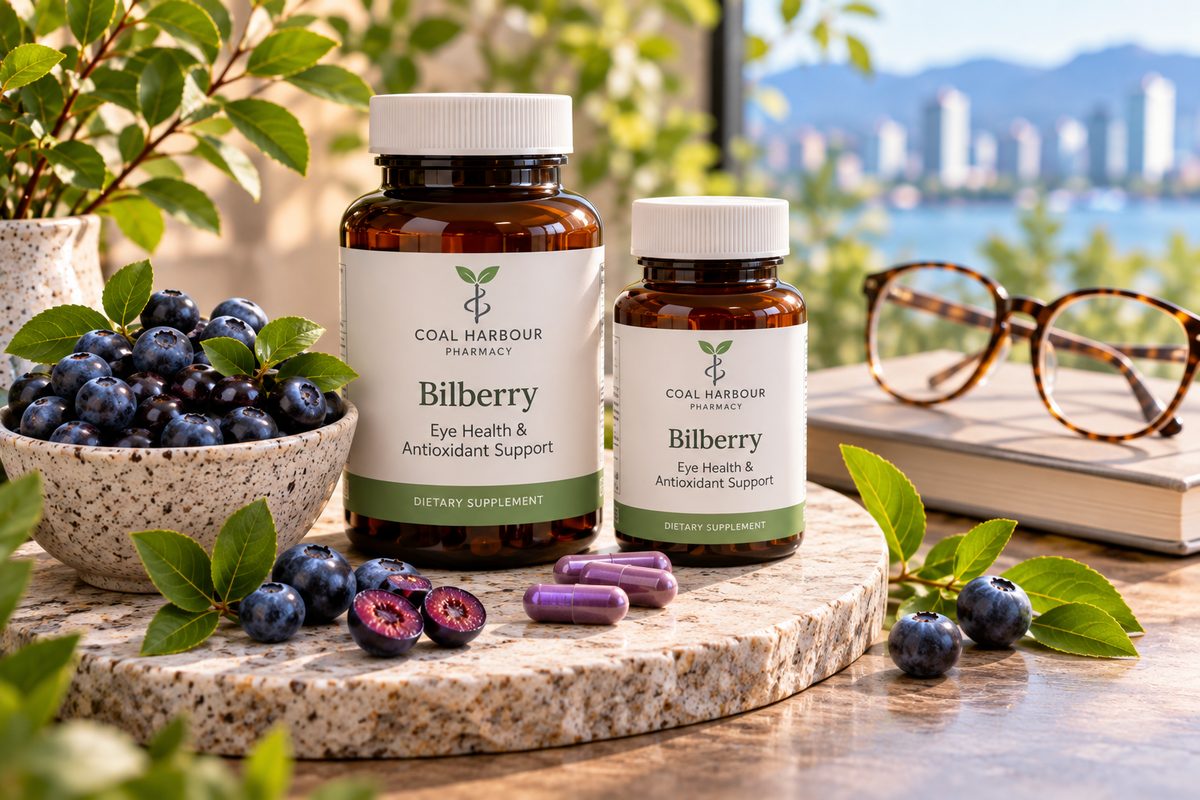
Bilberry: An anthocyanin-rich botanical extract.
Antioxidant Supplements: A broader range of products containing selected antioxidant ingredients.
Heart & Cardiovascular Health: Nutritional products associated with cardiovascular wellness.
These products should be evaluated individually and should not automatically be combined.
Explore Bioflavonoids – Antioxidant, Immune & Circulatory Support
Why Shop Bioflavonoids at Coal Harbour Pharmacy?
Choosing a bioflavonoid supplement involves more than comparing capsule counts.
The type of flavonoid, botanical source, ingredient amount, formulation, and product authorization all matter.
At Coal Harbour Pharmacy, our Bioflavonoids – Antioxidant, Immune & Circulatory Support collection provides a convenient destination for exploring products containing citrus bioflavonoids and related plant compounds.
Whether you're comparing vitamin C combination formulas, researching quercetin, or exploring rutin and hesperidin, understanding the differences can help you make an informed choice.
What to Compare Before Buying
-
Individual bioflavonoid ingredients
-
Botanical sources
-
Standardized extract amounts
-
Combination formulas
-
Serving sizes
-
Product directions
-
Canadian authorization
-
Potential interactions
Choose products according to your needs, not simply the number of ingredients on the label.
Shop Bioflavonoids – Antioxidant, Immune & Circulatory Support at Coal Harbour Pharmacy
Frequently Asked Questions
What Are Bioflavonoids Good For?
Bioflavonoids are plant compounds studied for antioxidant activity and potential effects on vascular and immune-related biological processes. Their clinical benefits vary by compound, and many claims remain uncertain.
Are Bioflavonoids the Same as Flavonoids?
The terms are commonly used interchangeably. Flavonoids are a large family of plant-derived polyphenolic compounds.
What Are Citrus Bioflavonoids?
Citrus bioflavonoids are flavonoid compounds found in citrus fruits, including hesperidin, naringin, and related substances.
Do Bioflavonoids Help the Immune System?
Certain bioflavonoids influence immune-related pathways in laboratory research, but there is insufficient evidence that general supplementation prevents infections or reliably improves immune function in healthy adults.
Do Bioflavonoids Improve Circulation?
Some specific flavonoids and medicinal formulations have been studied for vascular or venous outcomes. Results cannot automatically be generalized to all bioflavonoid supplements.
Is Quercetin a Bioflavonoid?
Yes. Quercetin belongs to the flavonol subgroup of flavonoids and occurs naturally in foods such as onions, apples, and berries.
What Is the Difference Between Rutin and Hesperidin?
Rutin is a flavonoid glycoside related to quercetin, while hesperidin is a citrus flavanone glycoside. Their natural sources, chemistry, and research applications differ.
Should You Take Vitamin C With Bioflavonoids?
Not necessarily. Vitamin C is an essential nutrient, while bioflavonoids are nonessential plant compounds. Combination products may be convenient, but they aren't automatically superior to vitamin C alone.
What Foods Are Rich in Bioflavonoids?
Citrus fruits, berries, apples, onions, tea, buckwheat, and various vegetables contain different flavonoid compounds.
Are Bioflavonoid Supplements Safe for Daily Use?
Safety depends on the specific ingredient, amount, duration, medications, and health circumstances. Long-term safety evidence is limited for some concentrated flavonoids.
What Should I Look for in a Bioflavonoid Supplement?
Compare the named compounds, botanical sources, ingredient amounts, standardization, product authorization, and directions.
Where Can I Buy Bioflavonoids in Canada?
Explore the Bioflavonoids collection at Coal Harbour Pharmacy to compare available citrus bioflavonoid complexes and related supplements.
Quick Answer: Are Bioflavonoids Worth Adding to Your Wellness Routine?
Bioflavonoids are naturally occurring plant compounds found in citrus fruits, berries, onions, tea, and many other foods.
Compounds such as quercetin, rutin, and hesperidin have attracted scientific interest for their antioxidant activity and potential effects on vascular and immune-related processes.
However, clinical benefits vary by ingredient, and there is no established need for everyone to take a bioflavonoid supplement.
For general wellness, a varied plant-rich diet remains the strongest foundation.
If you're considering a supplement, choose according to its specific ingredients, evidence, authorized use, and your individual health needs.
Bioflavonoids: A Valuable Part of Plant-Based Wellness Research
Bioflavonoids may not be as familiar as vitamin C, but they are present in many of the colourful foods we eat every day.
From citrus-derived hesperidin to quercetin in onions and rutin in buckwheat, these compounds represent a diverse family of plant nutrients being studied for their biological effects.
Their growing popularity reflects genuine scientific interest—but also highlights the importance of separating promising research from established clinical benefits.
The best wellness routine begins with balanced nutrition, healthy lifestyle habits, and informed supplement choices.
Explore the science. Compare the ingredients. Choose antioxidant support with confidence.
Ready to discover available formulations?
Shop Bioflavonoids – Antioxidant, Immune & Circulatory Support at Coal Harbour Pharmacy.

Written by CHP — Pharmacist Reviewed

Leave a comment
This site is protected by hCaptcha and the hCaptcha Privacy Policy and Terms of Service apply.