
Article: Beyond Blueberries: Why Bilberry Supplements Are Getting Attention for Eye Health
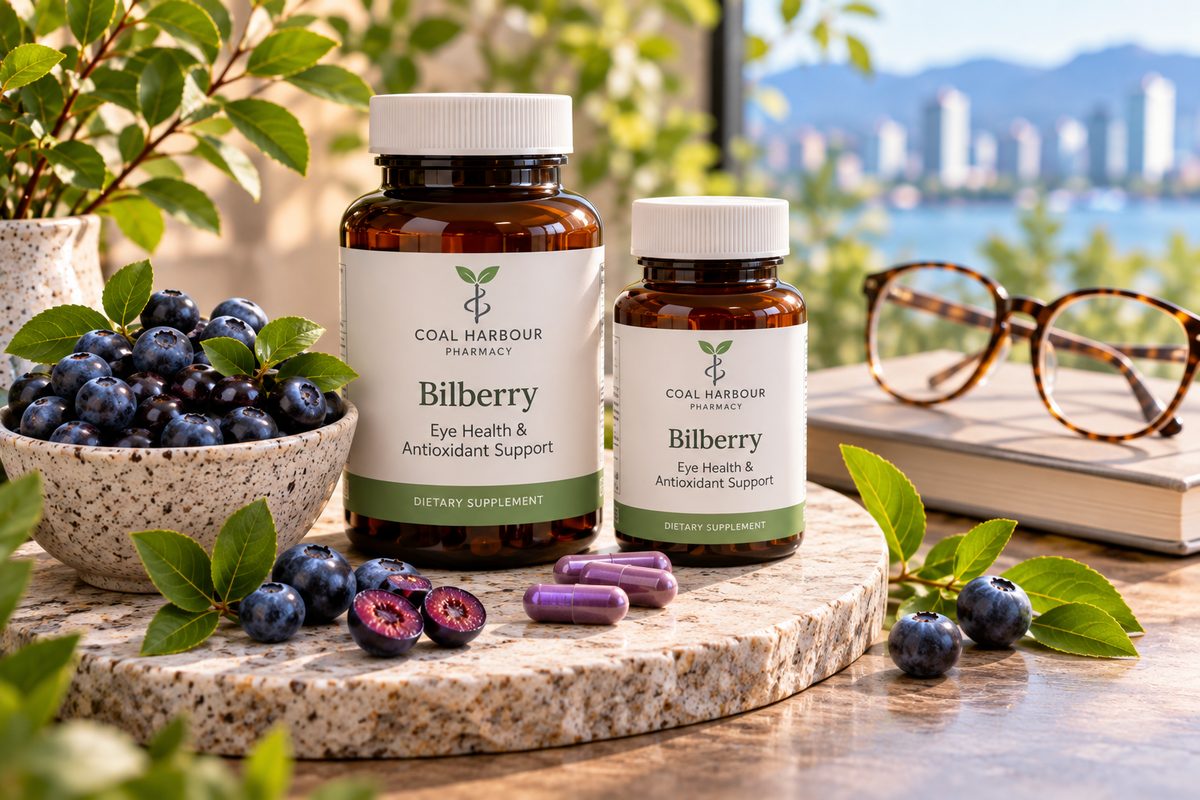
Beyond Blueberries: Why Bilberry Supplements Are Getting Attention for Eye Health
Discover the Benefits of Bilberry, Anthocyanins & Antioxidant Support for Everyday Vision Wellness
When it comes to eye health, carrots and blueberries often get most of the attention. But another small, dark-purple berry has become increasingly popular in the world of nutritional supplements: bilberry.
Closely related to blueberries, bilberries are rich in naturally occurring plant pigments called anthocyanins, which have attracted scientific interest for their antioxidant properties and potential effects on eye-related biological processes.
From long hours spent looking at screens to concerns about maintaining healthy vision as we age, many people are exploring nutritional approaches to everyday eye wellness.
But are bilberry supplements actually beneficial for eyesight? Can they improve night vision, reduce eye fatigue, or protect against age-related vision changes?
The science is more complicated than many supplement advertisements suggest.
In this guide, we'll explore what bilberry is, how it compares with blueberries, what research says about eye health, and how to choose a quality bilberry supplement.
Explore Bilberry Supplements – Eye Health & Antioxidant Support at Coal Harbour Pharmacy
What Is Bilberry?
Bilberry (Vaccinium myrtillus) is a small, dark-blue to purple berry native to parts of Europe and northern Asia.
It belongs to the same botanical genus as the common blueberry but is a distinct species.
Bilberries have traditionally been consumed as food and used in herbal preparations.
Today, bilberry extracts are available in capsules, tablets, powders, and combination supplements.
What Makes Bilberry Interesting?
Bilberries contain several naturally occurring plant compounds, including:
-
Anthocyanins: Pigments responsible for their deep purple colour.
-
Polyphenols: A broad group of plant compounds studied for antioxidant activity.
-
Flavonoids: Plant compounds that include anthocyanins and other related substances.
-
Other Phytonutrients: Naturally occurring compounds found in berries and plant foods.
Anthocyanins are the main reason bilberry has attracted attention in eye-health supplement research.
However, the presence of antioxidants does not automatically establish that taking a supplement improves vision or prevents eye disease.
Bilberry vs Blueberry: What's the Difference?
Bilberries and blueberries look similar, but they are not identical.
Bilberries

Typically smaller, with deep-purple flesh inside.
Blueberries

Usually larger, with pale green or whitish flesh inside.
| Feature | Bilberry | Blueberry |
|---|---|---|
| Botanical species | Vaccinium myrtillus | Commonly Vaccinium corymbosum |
| Appearance | Small, dark-purple berries | Usually larger, blue berries |
| Flesh colour | Deep red-purple | Generally pale green or white |
| Anthocyanins | Rich source | Also contains anthocyanins |
| Common supplement use | Standardized botanical extracts | Fruit powders and extracts |
| Research interest | Eye-related and antioxidant outcomes | Nutrition, cognition and cardiovascular wellness |
Is Bilberry Better Than Blueberry for Eye Health?
Not necessarily.
Both contain beneficial plant compounds, but research involving a concentrated bilberry extract cannot automatically be applied to ordinary blueberries—or vice versa.
Bilberry extracts may offer standardized quantities of selected compounds, while whole blueberries provide fibre, water, and a broader food-based nutritional profile.
The best approach is to enjoy a varied diet containing colourful fruits and vegetables, while evaluating supplements separately according to their evidence and intended use.
Why Are Bilberry Supplements Associated With Eye Health?
The eye is a metabolically active organ that depends on a complex network of cells, blood vessels, and protective mechanisms.
Normal visual function involves the retina, optic nerve, lens, cornea, and supporting tissues.
Researchers have investigated whether compounds in bilberry could influence processes associated with oxidative stress, inflammation, and small blood vessels.
1. Antioxidant Activity
Anthocyanins can demonstrate antioxidant activity in laboratory experiments.
Oxidative stress occurs when the production of reactive molecules exceeds the body's ability to manage them.
However, laboratory antioxidant activity does not necessarily mean that an oral bilberry supplement will produce a clinically meaningful improvement in eye health.
2. Retinal Health Research
The retina is the light-sensitive tissue at the back of the eye.
Bilberry compounds have been investigated in experimental research involving retinal cells and related biological pathways.
These findings are scientifically interesting, but they do not establish that bilberry prevents retinal disease in humans.
3. Microcirculation
Some studies have examined the possible effects of bilberry extracts on vascular function and circulation-related measurements.
The evidence is not strong enough to conclude that bilberry supplements reliably improve circulation in the eyes.
Bilberry's connection with eye health is based on plausible biological mechanisms and preliminary clinical research—not definitive proof of improved eyesight.
1. Bilberry & Night Vision: Does It Really Work?
One of the most famous claims about bilberry is that it improves night vision.
This reputation is partly associated with historical stories about pilots consuming bilberry preparations during World War II.
However, those stories are not reliable scientific evidence.
What Does Modern Research Say?
Clinical studies examining bilberry and night vision have produced inconsistent findings.
Better-controlled research has not established a reliable improvement in night vision among people with normal eyesight.
Can Bilberry Help You See Better in the Dark?
There is currently insufficient convincing evidence to recommend bilberry supplements for improving night vision.
People experiencing worsening night vision should have their eyes examined rather than relying on supplements.
Night-vision difficulties can have several causes, including cataracts, refractive problems, and retinal conditions.
2. Bilberry & Digital Eye Fatigue
Computers, smartphones, and tablets are part of everyday life.
Extended screen use can contribute to symptoms commonly associated with digital eye strain.
These may include:
-
Dryness or irritation
-
Blurred vision
-
Headaches
-
Difficulty maintaining focus
-
General eye discomfort
Can Bilberry Reduce Screen-Related Eye Fatigue?
Some small studies involving bilberry-containing formulations have explored visual fatigue and related symptoms.
However, the findings are preliminary, and some studies use multiple ingredients, making it difficult to determine the contribution of bilberry alone.
There is not enough strong evidence to recommend bilberry as an established treatment for digital eye strain.
What Actually Helps With Screen Fatigue?
Practical approaches include regular breaks, appropriate screen positioning, blinking, correcting vision problems, and addressing dry-eye symptoms.
A common reminder is the 20-20-20 rule: approximately every 20 minutes, look at something about 20 feet away for 20 seconds.
This is a useful behavioural strategy, although evidence for the exact timing is limited.
Explore Eye Health Supplements & Everyday Vision Wellness
3. Bilberry & Age-Related Eye Health
Maintaining healthy vision becomes increasingly important with age.
Age-related eye concerns can include cataracts, macular degeneration, glaucoma, and changes in visual function.
Because oxidative stress is involved in several eye-related biological processes, researchers have investigated dietary antioxidants and specific nutritional formulations.
Can Bilberry Prevent Age-Related Macular Degeneration?
There is insufficient clinical evidence that bilberry supplements prevent or treat age-related macular degeneration (AMD).
This distinction matters because certain AREDS2 nutritional formulations have evidence supporting a reduced risk of progression to advanced AMD in specific patients.
Bilberry is not an established replacement for an AREDS2 formulation.
What About Cataracts or Glaucoma?
Bilberry has not been established as an effective treatment or prevention strategy for cataracts or glaucoma.
Regular comprehensive eye examinations remain important, particularly for people with existing eye conditions or elevated risk.
Bilberry may be an area of nutritional research, but it should not replace evidence-based eye care.
4. Bilberry & Antioxidant Wellness Beyond the Eyes
Although bilberry is commonly marketed for eye health, its anthocyanins have also attracted broader nutritional research interest.
Researchers have explored potential relationships between berry-derived polyphenols and:
-
Oxidative stress markers
-
Vascular function
-
Inflammatory pathways
-
Glucose-related metabolic processes
-
General cardiovascular wellness
However, evidence varies considerably across studies, and findings from whole berries, isolated anthocyanins, and concentrated extracts are not interchangeable.
Does Bilberry Support Heart Health?
Some preliminary studies have investigated vascular and metabolic markers, but there is insufficient evidence that bilberry supplements prevent cardiovascular disease.
Does Bilberry Lower Blood Sugar?
Certain berry compounds have been investigated for glucose-related effects.
However, bilberry should not be used as a substitute for diabetes treatment or blood-glucose management prescribed by a healthcare professional.
For most people, eating a variety of berries is a more established nutritional habit than relying on a concentrated extract for broad health benefits.
Bilberry Benefits: What Does the Evidence Actually Support?
| Potential Benefit | Research Status | What Customers Should Know |
|---|---|---|
| Antioxidant activity | Well documented in laboratory research | Does not guarantee clinical benefits |
| Eye fatigue | Preliminary, limited human research | Not an established treatment |
| Night vision | Inconsistent findings | Reliable improvement not demonstrated |
| Retinal protection | Primarily experimental research | Human clinical benefits unproven |
| Age-related eye health | Insufficient evidence | Not a replacement for AREDS2 or medical care |
| Circulation support | Limited and mixed research | Clinical significance uncertain |
| General metabolic wellness | Emerging research | Not an established treatment |
The takeaway: Bilberry is a promising subject of antioxidant and eye-health research, but many popular claims are stronger than the available clinical evidence.
Bilberry vs Lutein vs Zeaxanthin: Which Is Better for Eye Health?
Bilberry, lutein, and zeaxanthin are frequently found in eye-health supplement collections.
However, they are different compounds with different roles and evidence.
| Ingredient | What It Is | Main Research Interest |
|---|---|---|
| Bilberry | Botanical extract rich in anthocyanins | Antioxidant and selected visual-function research |
| Lutein | Carotenoid found in leafy greens and other foods | Macular pigment and retinal nutrition |
| Zeaxanthin | Carotenoid concentrated in the macula | Macular pigment and retinal nutrition |
| Vitamin A | Essential fat-soluble vitamin | Normal vision and deficiency prevention |
| Omega-3 | Essential fatty acids including EPA and DHA | Retinal nutrition and selected eye-related outcomes |
Which Has the Strongest Evidence?
The evidence depends on the intended purpose.
Lutein and zeaxanthin are components of the studied AREDS2 formulation for certain people with AMD.
Vitamin A is essential for normal vision, and deficiency can impair night vision.
Bilberry remains an investigational botanical supplement for many eye-related claims.
These ingredients should not be treated as interchangeable or automatically combined.
Explore Bilberry, Lutein & Eye Health Supplements
Whole Bilberries vs Bilberry Supplements
Should you eat bilberries or take a supplement?
Both options have different characteristics.
Whole Bilberries
Whole bilberries provide naturally occurring plant compounds along with dietary fibre and other food components.
They can contribute to a varied, balanced diet.
Bilberry Supplements
Supplements may contain concentrated extracts standardized for specific compounds.
They can provide a more consistent labelled amount of certain constituents, depending on the product.
However, concentrated extracts are not automatically more effective than whole foods.
Which Should You Choose?
For general nutrition, whole berries are an excellent option.
For anyone considering a bilberry supplement, the decision should depend on the intended use, product evidence, safety, and individual circumstances.
How to Choose a Quality Bilberry Supplement
Not all bilberry products are formulated the same way.
Understanding the label can help you compare options more effectively.
1. Check the Botanical Name
Look for Vaccinium myrtillus.
This helps distinguish European bilberry from other berry species.
2. Review the Extract Standardization
Some products list a standardized percentage of anthocyanins or anthocyanosides.
These terms may be used differently depending on the manufacturer's analytical methods.
A higher standardized percentage does not automatically mean greater clinical effectiveness.
3. Compare the Amount Per Serving
Check the amount of extract provided per capsule or serving.
Avoid comparing products based only on bottle size.
4. Look for Additional Ingredients
Some formulas combine bilberry with:
-
Lutein
-
Zeaxanthin
-
Vitamin A
-
Vitamin C
-
Zinc
-
Other botanical antioxidants
Combination formulas may serve different intended purposes, but more ingredients do not necessarily mean better results.
5. Check Canadian Product Authorization
For natural health products sold in Canada, look for an applicable Natural Product Number (NPN).
An NPN indicates that Health Canada has authorized the product for sale under the applicable regulatory framework.
Always follow the authorized product directions and claims.
6. Consider Your Health & Medications
Bilberry extracts may not be appropriate for everyone.
Discuss supplementation with a pharmacist or healthcare professional if you take medication, have a medical condition, or are pregnant or breastfeeding.
Shop Bilberry Supplements at Coal Harbour Pharmacy
Are Bilberry Supplements Safe?
Bilberries consumed as food are generally well tolerated.
Concentrated bilberry supplements require additional consideration because they can provide different exposures than ordinary food.
Possible concerns include digestive discomfort, allergic reactions, and potential interactions with medications.
There is limited reliable safety information for concentrated bilberry supplements during pregnancy and breastfeeding.
People taking anticoagulant or antiplatelet medications, or medications for blood glucose management, should discuss bilberry supplements with their healthcare professional because interactions are possible or insufficiently studied.
Avoid assuming that a plant-derived supplement is automatically safe for long-term use.
Build a Smarter Daily Eye Wellness Routine
Supporting eye health involves more than choosing an antioxidant supplement.
A practical routine should combine everyday habits with appropriate professional care.
Morning: Nutrition & Protection
Eat a balanced breakfast that includes nutrient-rich foods.
When outdoors, wear sunglasses that provide appropriate ultraviolet protection.
During the Day: Screen Comfort
Take regular breaks from prolonged near work, blink frequently, and adjust your workstation for comfort.
With Meals: Eye-Friendly Nutrition
Include leafy greens, colourful vegetables, berries, and appropriate sources of healthy fats.
Evening: Recovery & Rest
Maintain healthy sleep habits and reduce unnecessary visual strain.
When Appropriate: Targeted Supplements
If you're considering bilberry, lutein, zeaxanthin, or another eye-health product, choose according to your individual needs and the available evidence.
Healthy Nutrition → Screen Habits → UV Protection → Regular Eye Exams → Targeted Supplements When Appropriate
The 3-Part Eye Wellness Starter Routine
Instead of buying several supplements with overlapping ingredients, focus on three useful foundations.
1. Everyday Eye Protection
Choose appropriate sunglasses and maintain comfortable screen-use habits.
2. Nutrient-Rich Nutrition
Include foods containing carotenoids, vitamin A precursors, and other essential nutrients.
3. Targeted Eye Health Support
Consider a suitable nutritional supplement only when there is a clear reason.
Bilberry may be of interest to adults exploring botanical antioxidant products, but its eye-health benefits remain uncertain.
Explore Bilberry & Eye Health Essentials
Complete Your Eye Health & Antioxidant Routine
Several related CHP collections can help customers explore different aspects of eye wellness.
Bilberry Supplements – Botanical extracts rich in anthocyanins.
Eye Health Supplements – Nutritional formulas for selected vision-related needs.
Lutein & Zeaxanthin – Carotenoids involved in macular pigment.
Blueberry Supplements – Berry-derived nutritional products.
Antioxidant Supplements – Products containing selected antioxidant compounds.
Vitamin A – An essential nutrient involved in normal visual function.
These products serve different purposes and should not automatically be taken together.
Explore Bilberry Supplements – Eye Health & Antioxidant Support
Why Shop Bilberry Supplements at Coal Harbour Pharmacy?
Choosing a bilberry supplement involves more than comparing the number of capsules in a bottle.
The botanical species, extract concentration, additional ingredients, serving size, and product directions all deserve consideration.
At Coal Harbour Pharmacy, our Bilberry Supplements – Eye Health & Antioxidant Support collection provides a convenient destination for exploring bilberry-based wellness products.
Whether you're comparing standalone bilberry extracts or combination eye-health formulas, understanding the differences can help you make a more informed choice.
Explore products according to:
-
Botanical ingredients
-
Extract standardization
-
Serving amounts
-
Additional nutrients
-
Intended use
-
Product authorization
-
Individual health considerations
A well-informed supplement purchase starts with realistic expectations and clear product information.
Shop Bilberry Supplements at Coal Harbour Pharmacy
Frequently Asked Questions
What Is Bilberry Good For?
Bilberry contains anthocyanins and other polyphenols studied for antioxidant activity and potential effects on selected eye-related processes. However, many clinical benefits remain unproven.
Is Bilberry Good for Eyesight?
Bilberry has attracted interest in eye-health research, but there is insufficient strong evidence that supplementation improves eyesight in healthy people or prevents eye disease.
Does Bilberry Improve Night Vision?
Well-controlled research has not established a reliable night-vision benefit from bilberry supplementation.
Can Bilberry Help With Digital Eye Strain?
Some preliminary studies have explored bilberry-containing products for visual fatigue, but evidence is insufficient to recommend bilberry as an established treatment.
Is Bilberry Better Than Blueberry?
Neither is universally better. Whole blueberries provide dietary fibre and nutrients, while bilberry supplements may contain concentrated extracts. Their uses and evidence differ.
What Are Anthocyanins?
Anthocyanins are naturally occurring plant pigments responsible for the red, blue, and purple colours of many fruits and vegetables. They are studied for antioxidant and other biological activities.
Can Bilberry Prevent Macular Degeneration?
There is insufficient evidence that bilberry prevents or treats age-related macular degeneration. Certain AREDS2 formulations have evidence for specific patients, but bilberry is not a substitute.
Can You Take Bilberry With Lutein?
Some products contain both ingredients, but combination use should be assessed according to the specific formula, intended purpose, medications, and individual health needs.
How Long Does Bilberry Take to Work?
There is no established timeline for improved vision from bilberry supplementation because clinically meaningful benefits have not been consistently demonstrated.
What Should You Look for in a Bilberry Supplement?
Check the botanical name Vaccinium myrtillus, extract standardization, amount per serving, additional ingredients, Canadian product authorization, and product directions.
Are Bilberry Supplements Safe for Everyone?
No. Concentrated extracts may not be suitable for everyone, particularly people taking certain medications or those who are pregnant or breastfeeding.
Where Can I Buy Bilberry Supplements in Canada?
Explore the Bilberry Supplements collection at Coal Harbour Pharmacy to compare available formulations and related eye-health products.
Quick Answer: Are Bilberry Supplements Worth Considering for Eye Health?
Bilberry supplements contain anthocyanin-rich botanical extracts that have attracted research interest for antioxidant activity and selected aspects of visual function.
However, clinical evidence remains limited, and bilberry has not been established as a reliable way to improve night vision, prevent eye disease, or treat digital eye strain.
For most people, balanced nutrition, appropriate eye protection, regular eye examinations, and evidence-based care remain the most important foundations of eye health.
Bilberry may be worth exploring as a botanical supplement, provided expectations are realistic and the product is appropriate for individual needs.
Beyond Blueberries: Making an Informed Choice About Bilberry
Bilberry may be small, but its rich concentration of anthocyanins has made it a fascinating subject of nutritional research.
Its close relationship to blueberries, deep-purple pigments, and history of traditional use have helped build its reputation as an eye-health botanical.
Yet the most important distinction is between promising research and proven clinical benefits.
Bilberry isn't a miracle solution for eyesight, and it shouldn't replace established eye care.
Instead, it represents one option within the broader world of botanical antioxidants and nutritional wellness.
Look beyond the hype. Understand the ingredients. Choose eye-health support with confidence.
Ready to compare bilberry formulations?
Shop Bilberry Supplements – Eye Health & Antioxidant Support at Coal Harbour Pharmacy.

Written by CHP — Pharmacist Reviewed


Leave a comment
This site is protected by hCaptcha and the hCaptcha Privacy Policy and Terms of Service apply.