
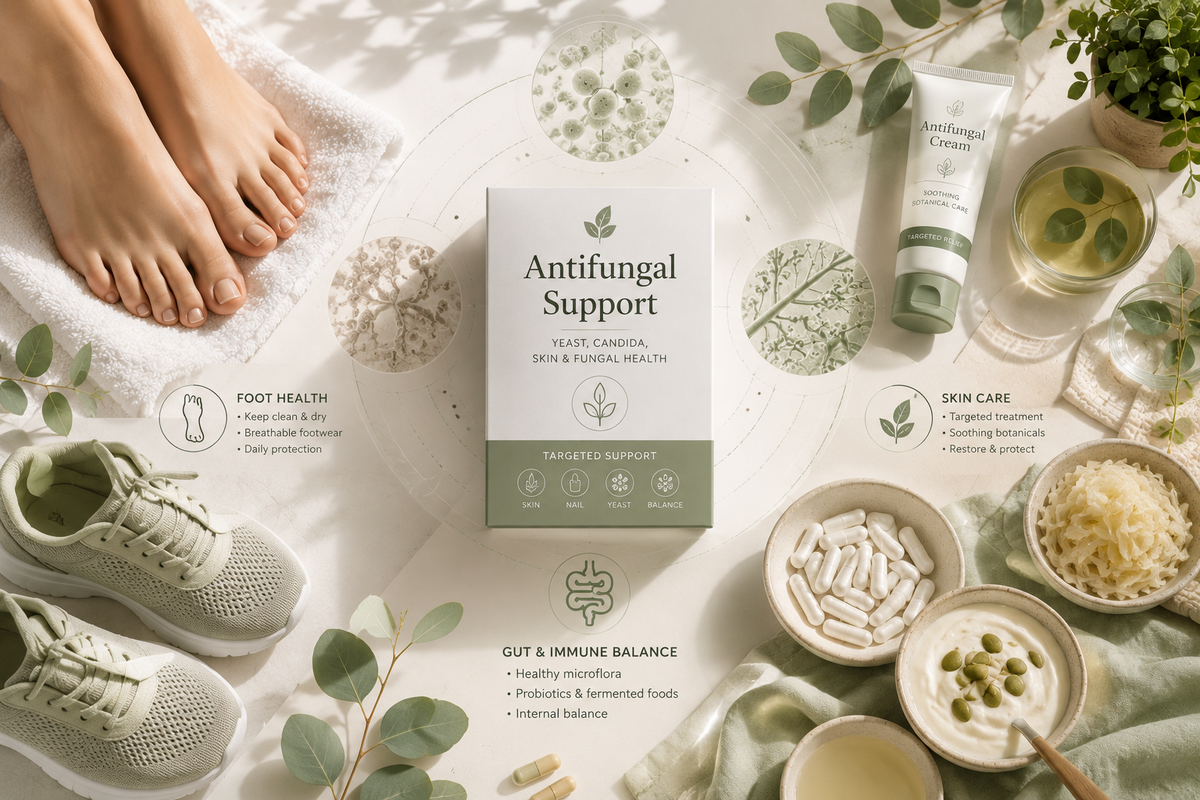
Why Fungal Problems Keep Coming Back: A Guide to Antifungal Support
When a Fungal Problem Returns, Treating the Symptoms May Not Be the Whole Story
You treat the problem, things improve — and then the itching, irritation, scaling, or other symptoms seem to return.
Recurring fungal concerns can be frustrating, but recurrence doesn’t necessarily mean the original treatment “didn’t work.” Fungi thrive under particular conditions, and repeated exposure, moisture, incomplete treatment, contaminated personal items, or an underlying health issue can all contribute to problems returning.
The right approach depends heavily on where the fungal problem is occurring and what is actually causing it. Athlete’s foot, ringworm, nail fungus, vaginal yeast infections, and oral thrush are not interchangeable conditions, even though fungi may be involved.
This guide explains why fungal problems may recur, the different types of antifungal support, and how to choose appropriate products for skin, yeast, Candida, and everyday fungal-health needs.
What Is Antifungal Support?
Antifungal support includes a range of products used to address fungal and yeast-related concerns, with the appropriate option depending on the type, location, and cause of the problem.
Depending on the condition, these may include:
• topical antifungal creams and liquids
• antifungal powders and sprays
• medicated foot-care products
• products for vaginal yeast infections
• oral-care products when appropriate
• hygiene and moisture-control products
• complementary wellness products
The important distinction: not every rash, itch, discharge, or nail change is fungal. Choosing the right product starts with understanding what you’re treating.
Why Do Fungal Problems Keep Coming Back?
Fungi naturally exist in our environment and, in some cases, on or within the human body. Problems can develop when conditions allow certain fungi or yeasts to multiply excessively.
Several factors can contribute to recurrence.
Moisture & Warmth
Warm, damp environments can encourage fungal growth.
Common examples include:
• sweaty shoes
• damp socks
• locker rooms and communal showers
• skin folds that remain moist
• clothing that traps heat and perspiration
For recurring athlete’s foot or similar skin concerns, addressing moisture can be an important part of preventing another episode.
Stopping Treatment Too Soon
Symptoms can improve before an infection has fully resolved.
Some antifungal products need to be used for a specified period—even after symptoms begin improving. Follow the complete directions on the product label or instructions from your healthcare professional.
Re-Exposure
Fungal organisms can remain on frequently used items and surfaces.
Depending on the condition, consider:
• washing towels regularly
• changing socks daily
• allowing shoes to dry completely
• avoiding sharing personal-care items
• cleaning relevant surfaces
• wearing footwear in communal showers
The Wrong Problem Is Being Treated
Eczema, dermatitis, psoriasis, bacterial infections, and other conditions can sometimes resemble fungal skin problems.
Repeatedly using antifungal products without improvement is a reason to seek professional assessment rather than simply trying another product.
Understanding Different Types of Fungal & Yeast Concerns
Athlete’s Foot
Athlete’s foot is a common fungal skin infection that frequently affects the spaces between the toes.
Symptoms may include:
• itching or burning
• peeling
• scaling
• cracking
• irritated skin
Helpful Product Categories
Antifungal Creams & Treatments
Keeping feet clean and dry can complement appropriate treatment.
Ringworm
Despite its name, ringworm isn’t caused by a worm. It’s a fungal infection of the skin.
It often produces an itchy, ring-shaped or scaly rash.
Topical antifungal medicines may be appropriate for many uncomplicated cases, but unusual, extensive, persistent, scalp, or recurrent symptoms should be assessed professionally.
Nail Fungus
Fungal nail infections can cause nails to become:
• thickened
• brittle
• discoloured
• distorted
Nail infections are often more difficult to treat than superficial skin infections because the fungus can be located within or underneath the nail.
Treatment can also take considerable time as healthy nail grows out.
Vaginal Yeast Infections & Candida
Candida is a type of yeast that normally lives in and on the body. Under certain circumstances, overgrowth can contribute to infection.
Vaginal yeast infections may cause symptoms such as itching, irritation, redness, or discharge.
OTC antifungal treatments are available for some uncomplicated vaginal yeast infections.
However, first-time symptoms, pregnancy, frequent recurrence, unusual discharge, fever, pelvic pain, or symptoms that don’t improve should be discussed with a healthcare professional because other conditions can cause similar symptoms.
How to Choose the Right Antifungal Support
Instead of shopping for “the strongest antifungal,” start with where the symptoms are occurring.
For Skin Concerns
Look for products specifically intended for fungal skin infections, such as appropriate antifungal creams, liquids, or sprays.
For Feet
Consider combining appropriate treatment with moisture-control and foot-hygiene products.
For Nails
Choose products specifically designed for nail use and understand that improvement may take considerably longer than treating superficial skin infections.
For Vaginal Yeast Concerns
Choose treatments specifically intended for vaginal yeast infections and follow the complete directions carefully.
For General Gut & Microbiome Wellness
Probiotics and digestive-health products may support general microbiome wellness, but they shouldn’t be presented as replacements for antifungal medication when an actual fungal infection requires treatment.
Antifungal Cream, Spray or Powder: Which Should You Choose?
Different formats can suit different situations.
|
Format |
May Be Useful For |
Advantage |
|---|---|---|
|
Cream |
Localized skin areas |
Easy targeted application |
|
Liquid/Spray |
Hard-to-reach or broader areas |
Convenient application |
|
Powder |
Moisture-prone areas |
Helps keep the area dry |
|
Nail treatment |
Fungal nail concerns |
Designed specifically for nail application |
|
Vaginal treatment |
Appropriate yeast infections |
Condition-specific treatment |
Always follow the directions for the specific product, because active ingredients, indications, ages, and treatment durations vary.
Build a More Complete Antifungal Care Routine
Athlete’s Foot Routine
• appropriate antifungal treatment
• antifungal or moisture-control powder when appropriate
• foot hygiene products
• fresh, breathable socks
Fungal Skin Care Routine
• appropriate topical antifungal
• gentle body cleanser
• clean towels
• skin-care products appropriate to the affected area
Nail & Foot Routine
• nail-specific fungal treatment
• nail-care tools
• foot-care products
• moisture-management products
Women’s Yeast & Intimate Care Routine
• appropriate yeast-infection treatment
• gentle intimate hygiene
• women’s probiotics when desired for general microbiome support
Supporting Your Body During & After Treatment
Treatment is only one part of managing recurring problems.
Simple habits can help reduce conditions that favour fungal growth.
Keep moisture under control. Dry thoroughly after bathing, particularly between toes and within skin folds.
Change damp clothing. Don’t remain in sweaty workout clothing or wet swimwear longer than necessary.
Avoid sharing personal items. Towels, footwear, nail tools, and similar personal items can contribute to transmission.
Follow the full treatment directions. Don’t automatically stop because the area looks better.
Pay attention to recurrence. Frequent infections may warrant professional assessment to determine whether another condition or risk factor is contributing.
When Recurring Fungal Problems Need Professional Attention
Repeated fungal or yeast infections shouldn’t simply lead to an endless cycle of self-treatment.
Speak with a pharmacist, physician, or other qualified healthcare professional when:
• you’re uncertain whether the condition is actually fungal
• symptoms repeatedly return
• OTC treatment isn’t working
• symptoms are severe or spreading
• the scalp or extensive areas are involved
• you have significant nail involvement
• vaginal symptoms are occurring for the first time or frequently recur
• you are pregnant
• you have diabetes or a weakened immune system
• there is fever, significant pain, drainage, or another concerning symptom
This is particularly important because the correct diagnosis determines the correct treatment.
Why Shop Antifungal Support at Coal Harbour Pharmacy?
When you’re dealing with a fungal concern, navigating dozens of unrelated products can make choosing treatment harder.
Coal Harbour Pharmacy’s Antifungal Support – Yeast, Candida, Skin & Fungal Health collection brings relevant products together to make it easier to find options based on your needs.
Explore:
• antifungal skin treatments
• athlete’s foot and foot-care products
• fungal nail support
• yeast and intimate-care products
• hygiene and moisture-management essentials
• complementary microbiome and digestive wellness products
Explore Antifungal Support at Coal Harbour Pharmacy
Frequently Asked Questions
Why does my fungal infection keep coming back?
Fungal infections may recur because of continued exposure to warm or moist environments, re-exposure, stopping treatment prematurely, or an underlying factor that makes recurrence more likely. Sometimes the original condition may also have been incorrectly identified as fungal.
What is the best antifungal treatment?
There isn’t one best antifungal for every condition. The appropriate treatment depends on the type of fungus, affected body area, severity, age, and other health factors.
How long does antifungal treatment take?
Treatment time varies considerably. Some superficial skin infections may improve relatively quickly, while fungal nail infections can require much longer treatment and time for healthy nail to grow.
Can probiotics treat a fungal infection?
Probiotics may support general gut or microbiome health, but they shouldn’t replace proven antifungal treatment for a diagnosed fungal infection.
Is Candida the same as a fungal infection?
Candida is a genus of yeast, which is a type of fungus. Certain Candida species can cause infections such as vaginal candidiasis and oral thrush.
Quick Answers: Antifungal Support
How Can I Stop Fungal Problems From Coming Back?
Use the appropriate treatment for the recommended duration, keep susceptible areas clean and dry, reduce re-exposure, avoid sharing personal items, and seek professional assessment if infections repeatedly recur.
Should I Use Antifungal Cream or Powder?
Creams are commonly used to treat localized fungal skin infections, while powders can be useful for moisture control in certain situations. Some routines may use both types for different purposes, depending on product directions.
Should Recurring Fungal Problems Be Checked?
Yes. Frequent recurrence can justify professional assessment, particularly when the diagnosis is uncertain or standard OTC treatment hasn’t resolved the problem.
Stop the Cycle—Start With the Right Support
When fungal problems keep returning, simply buying another treatment may not address the reason they’re coming back.
Successful antifungal care starts by identifying the type of problem, choosing an appropriate treatment, using it correctly, and addressing environmental factors such as moisture and re-exposure.
Whether you’re shopping for skin antifungals, athlete’s foot care, nail support, yeast-infection products, or complementary fungal-health essentials, Coal Harbour Pharmacy makes it easier to find relevant options in one place.
Shop Antifungal Support – Yeast, Candida, Skin & Fungal Health

Written by CHP — Pharmacist Reviewed



Leave a comment
This site is protected by hCaptcha and the hCaptcha Privacy Policy and Terms of Service apply.